Packing Light for Any Trip
The size of your suitcase says nothing about how prepared you are — it says how much you're carrying.
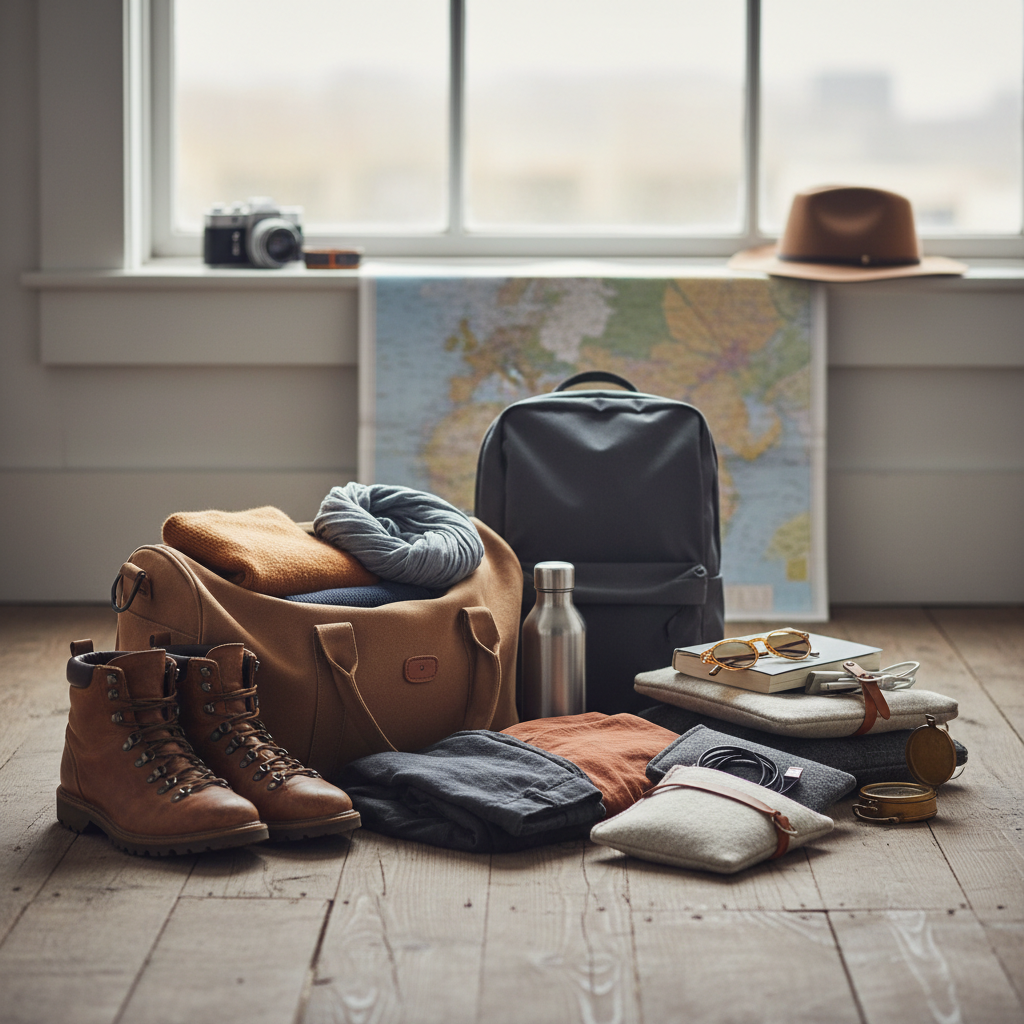
Somewhere between the anxious over-packer and the person who somehow travels for two weeks with a single carry-on is a system, not a personality trait. Packing light isn't about being naturally minimalist or having fewer possessions than everyone else — it's about a repeatable process that removes the guesswork that leads most people to pack "just in case" items they never touch.
Start from a capsule, not a wishlist
The instinct when packing is to imagine the trip scene by scene — dinner out, a hike, a meeting, a rainy day — and pack an outfit for each imagined scenario. This produces a suitcase full of single-purpose items, most of which are worn once or not at all. A capsule approach flips this: choose a small set of items that combine with each other in many ways, built around one or two colour families so that most tops go with most bottoms.
A useful starting ratio for most trips of a week or less is around five tops, two or three bottoms, one layer for warmth, and one pair of shoes beyond what you're wearing to travel. That's enough combinations for well over a week without repeating an identical outfit, and far less than most people instinctively pack.
The maths of combinations
- 5 tops × 3 bottoms already gives 15 different outfit combinations.
- Adding one extra layer roughly doubles that again for cooler evenings.
- None of this requires more than about eight garments total, excluding underwear and sleepwear.
Pack for laundry, not for avoiding it
Many people over-pack because they're planning to avoid washing anything until they're home. Most accommodation, even fairly basic, has some way to hand-wash a few items, and a small bar of travel soap or a sachet of detergent takes up almost no space. Planning on one wash of essentials mid-trip, rather than packing enough clothes to avoid it entirely, can cut the volume of clothing you need by close to half on longer trips.
The "one bag out" test
Before packing anything, lay out everything you're considering taking on the bed. Then remove one item you're unsure about and put it back in the wardrobe. Repeat this once more. Almost everyone, when honest, can remove at least two items from their initial pile without any real loss, because the first pass at packing is usually driven by anxiety rather than by an accurate read of what a trip requires.
Toiletries: decant, don't duplicate
Full-size bottles are one of the heaviest and bulkiest parts of most bags, and almost none of it gets used on a short trip. Small refillable bottles, filled only with what you'll realistically use, plus solid alternatives where they exist — solid shampoo bars, for instance — cut this weight dramatically. A good habit is keeping a small permanently packed toiletries bag, refilled after each trip, so this decision is made once rather than re-litigated every time you travel.
| Item | Common approach | Lighter approach |
|---|---|---|
| Shampoo | Full bottle from home | 30ml refillable or solid bar |
| Shoes | Three or four pairs "just in case" | One worn pair, one packed pair |
| Chargers and cables | Full set of spares | One multi-device cable, shared charger |
Rolling versus folding, and why it's overrated
Rolling clothes is often presented as the single trick that solves packing, and it does help slightly with wrinkles and space in a loosely packed bag, but it's a minor factor compared with simply packing fewer items in the first place. If you're relying on a folding technique to fit an overfull suitcase closed, the real problem is volume, not technique. Rolling is worth doing, but it won't rescue a list that was never edited down.
Build a permanent "always pack" list
A short, fixed list of items you take on every trip regardless of destination — chargers, a particular adapter, any regular medication, a couple of plasters — removes a category of last-minute panic and last-minute additions. Keeping this list somewhere you can glance at five minutes before leaving, rather than trying to recall it from memory each time, prevents both the forgotten essential and the over-cautious re-buying of things you actually already own.
Separate "always" from "sometimes"
Keep two short lists rather than one long one: an always list for genuine trip constants, and a sometimes list of items relevant to specific trip types — hiking boots, a swimsuit, formal shoes — that you consult only when relevant. This stops a general packing list from bloating into something that tries to cover every possible trip at once and ends up serving none of them well.
Weight distribution matters as much as volume
A bag that's technically light but awkwardly packed — heavy items at the bottom shifting around, or weight concentrated on one side — is uncomfortable to carry regardless of how little is actually inside it. Heavier items belong close to your back if using a backpack, or at the base near the wheels for a wheeled case, with lighter, bulkier items filling the remaining space. This has nothing to do with how much you've packed and everything to do with how it feels to carry it, which matters just as much on a long travel day.
Trust the destination, not just the suitcase
A surprising amount of over-packing comes from not trusting that a destination will have anything useful in it — extra toiletries, a phone charger, a jumper if the weather turns. Most places you'll travel to have shops, and most emergencies are solvable there rather than requiring you to have anticipated them from home. Packing a little less and trusting that a genuine gap can be filled on arrival is often more comfortable, and cheaper, than carrying redundancy for every possibility. For more ideas on paring things back generally, our lifestyle section covers related ground on owning and carrying less day to day.
The takeaway
Packing light is a system, not a personality — a small, colour-coordinated capsule of clothes, a plan to wash rather than avoid laundry, decanted toiletries, and a fixed always-list all combine to make packing quicker and travelling more comfortable. The single most useful habit is the two-item removal test right before you close the bag: it catches almost all of the anxious extras that a first pass at packing tends to include.
About the author
Idris Oyelaran covers consumer technology, privacy and applied science. He is happiest explaining a complicated system in ordinary language, and he tests every recommendation on his own devices before it appears in a story.