Sleeping Better in a Noisy Home
You can't always control the noise around you at night. You can control far more of your response to it than you'd think.
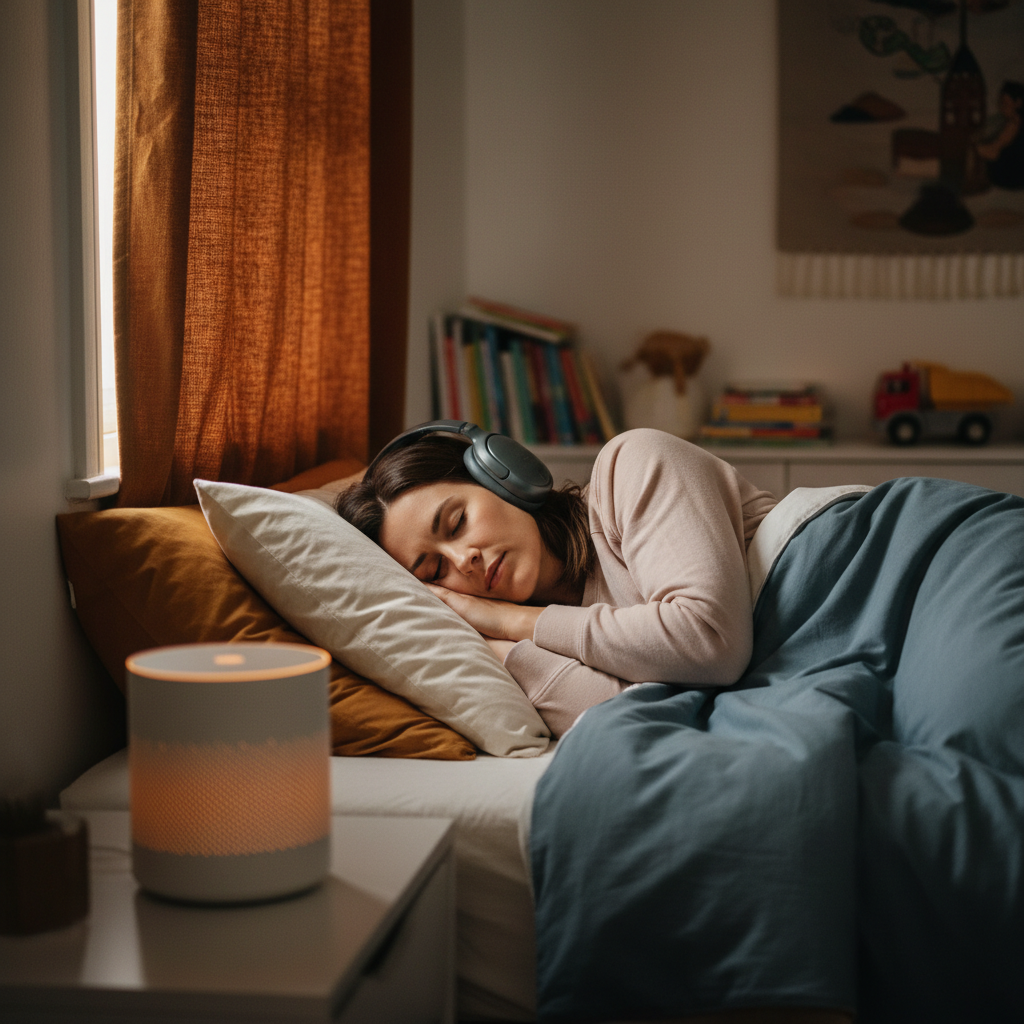
Not everyone gets to choose a quiet bedroom. Thin walls, a road outside, housemates on a different schedule, or a building with sound-carrying floors are facts of a lot of ordinary living situations, and no amount of sleep advice about "a calm, quiet bedroom" is useful if the noise itself isn't something you can simply remove. The more useful question isn't how to eliminate noise, which often isn't possible, but how to reduce its impact on sleep, which mostly is.
Not all noise disturbs sleep equally
Sleep researchers distinguish between steady, predictable noise and sudden, variable noise, and the second kind is far more disruptive even at a lower volume. A constant hum from traffic is generally less disturbing over a night than an intermittent noise like a door slamming, a dog barking sporadically, or a phone buzzing, because the brain habituates to steady sound but keeps reacting to unpredictable sound throughout the night, even when it doesn't fully wake you. This distinction matters because it means the goal often isn't "quieter" so much as "more consistent."
Mask, rather than eliminate
Where sudden noise can't be removed, adding a steady, low-level sound often reduces its disruptive effect more effectively than trying to block noise out entirely. A fan, a white noise machine, or a simple looped recording of steady sound raises the baseline noise level slightly, which makes sudden noises less of a jarring contrast against silence and therefore less likely to fully rouse you. This is a genuinely well-supported approach for exactly the kind of unpredictable noise — traffic, neighbours, shared housing — that's hardest to control directly.
Options worth trying
- A small fan, which many people find easier to fall asleep to than digital white noise apps, partly because it's a genuinely steady sound rather than a looped recording.
- A dedicated white noise or brown noise machine, which some find less fatiguing over a full night than a fan's mechanical whir.
- Soft earplugs, foam or wax-based, for noise that's disruptive even against a masking sound.
Address the room before the ears
Soft materials absorb sound; hard, flat surfaces reflect it. A bedroom with bare walls, hard flooring and no soft furnishing carries and reflects noise more than a room with rugs, curtains and upholstered furniture, quite apart from any noise coming from outside the room. Heavy curtains in particular do double duty, softening sound reflected within the room and reducing some of what comes through the window itself.
None of this requires major renovation. A rug where there was bare floor, heavier curtains than the thin ones that came with a rental, and a couple of cushions or a throw all measurably reduce how much a room amplifies sound, for relatively little cost.
| Noise source | Approach that tends to help most |
|---|---|
| Steady traffic hum | Heavier curtains, draught excluders under doors |
| Sudden, unpredictable sounds | Masking noise (fan or white noise), earplugs |
| Sound through thin internal walls | A bookshelf or soft furnishing against the shared wall |
Timing your own noise-sensitive tasks
Falling asleep is when most people are most sensitive to noise, but staying asleep once you're already deeply under is somewhat more resilient. This means front-loading your wind-down for quiet, even if you can't control the noise later in the night, gives you a better chance of falling asleep before a household or street noise pattern peaks. If a housemate or household reliably gets noisier later in the evening, going to bed and beginning to wind down a little earlier, before that noise starts, uses your most noise-sensitive window more favourably.
Reduce your own reactivity, not just the noise
How anxious or annoyed you feel about noise measurably affects how disruptive it actually is to your sleep — a sound you're braced for and irritated by tends to wake you more thoroughly than the same sound experienced without that emotional charge. This isn't about pretending noise doesn't bother you; it's a practical observation that catastrophising about a noisy environment ("I'll never sleep with this racket") tends to make the noise's actual effect worse. A brief, deliberate reframe before bed — this noise is unpleasant but I have tools that reduce its effect — is a small thing that measurably helps some people more than it sounds like it should.
A short pre-bed routine for noisy homes
- Set up your masking sound (fan or white noise) before getting into bed, not after you're already lying awake frustrated.
- Put in earplugs if you're using them before you're tired enough to fumble with them in the dark.
- Do a brief, calm check of what's within your control tonight, and let go of what isn't.
Talk to whoever's making the noise, if you can
It sounds obvious, but a surprising number of people endure months of disrupted sleep from a housemate's late-night habits or a neighbour's routine without ever raising it, out of politeness or the assumption nothing will change. A calm, specific conversation — not a vague complaint about "noise" but a specific ask, like closing a door after a certain time — resolves more of these situations than people expect, and costs nothing beyond a slightly awkward few minutes.
Protect the last hour before bed
Noise aside, a wound-up, alert mind is more easily disturbed by noise than a genuinely relaxed one. The basics of a calm last hour — dimmer light, no urgent tasks, nothing that spikes stress right before trying to sleep — make you somewhat more resilient to whatever noise the night brings, on top of whatever specific noise reduction steps you've taken. This connects to broader habits around evenings and routines covered in our lifestyle section, which are worth pairing with the noise-specific steps here rather than treating as separate problems.
The takeaway
Sleeping well in a noisy home rarely means achieving silence — it means reducing the contrast between sudden noise and background quiet through masking sound, softening the room itself with soft furnishings, timing your wind-down around when a household tends to get noisier, and not letting frustration about the noise compound its actual effect. Combined, these steps make a real difference even when the underlying noise is completely outside your control.
About the author
Mara Devlin edits the publication and writes about the internet's infrastructure and incentives. She spent a decade as a technology reporter and editor before founding this masthead, and still does most of her reporting by reading documentation nobody else wants to read.