Learning a Skill in Your Spare Hours
You don't need a free weekend to get genuinely good at something — you need fifteen honest minutes, used well.
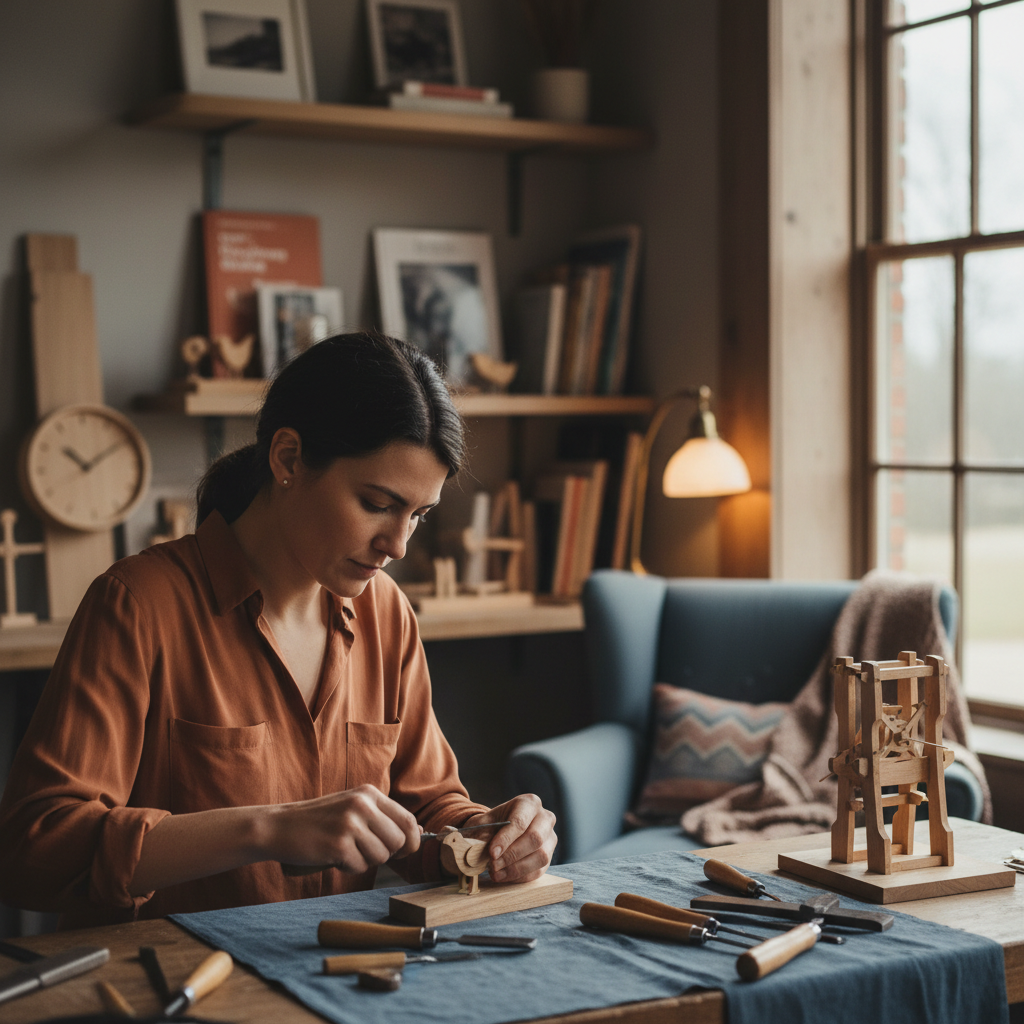
Somewhere along the way, learning a new skill got tangled up with the idea of a big block of uninterrupted time — a course, a weekend workshop, a clear evening with nothing else on. That's a shame, because most adults never have that time reliably, and waiting for it is how a guitar ends up in the corner of a room untouched for two years. The people who actually get somewhere with a new skill in adult life are usually not the ones with more free time; they're the ones who've made peace with using fifteen or twenty minutes properly, often, rather than three hours occasionally.
Frequency beats duration
Skill learning, whether it's a language, an instrument, a craft or a sport, responds more to how often you touch it than to how long each session runs. Ten minutes a day for a month builds more genuine capability than one five-hour session once a month, because your brain needs repeated, spaced contact with new material to actually retain it — a single long session mostly produces a feeling of progress that fades within days.
This matters practically because it changes what you're looking for in your schedule. You're not hunting for a free evening; you're hunting for a repeatable slot, however short, that survives contact with an ordinary week. A commute, the ten minutes after lunch, the time waiting for dinner to cook — these are more valuable to a new skill than an occasional long weekend, because they can actually happen every day.
Attach it to something that already happens
- Practise vocabulary while the kettle boils, not "sometime in the evening."
- Do scales or chord practice for ten minutes before you allow yourself to check your phone in the morning.
- Sketch or write for the length of one podcast segment during a commute.
Tying practice to an existing routine removes the need to remember or motivate yourself fresh each day — the trigger is already built into your life.
Pick a narrow starting point, not a broad ambition
"Learn Spanish" or "get better at drawing" are directions, not tasks, and directions are hard to start on any given Tuesday evening. A narrower target — thirty common verbs, or drawing hands from five reference photos — gives you something concrete to sit down and do in a short session, and concrete tasks are far easier to actually begin than vague ones.
Narrowing the target also makes progress visible faster, which matters more than it sounds. Visible progress, even small, is what keeps you returning to a skill during the weeks when motivation on its own would not be enough.
Track effort, not talent
Judging yourself by how good you are this week is discouraging, because skill develops unevenly and slowly, and short sessions in particular can feel like they're not amounting to much day to day. Judging yourself instead by whether you did the practice — a simple mark on a calendar, a tally, an app streak — gives you a measure you can actually control and that tends to correlate with results over months even when it doesn't feel like it week to week.
| Measuring by | What it tends to produce |
|---|---|
| How good you feel today | Frequent discouragement, gaps in practice |
| Whether you showed up | Consistency, which reliably produces skill over time |
Use dead time deliberately
Most weeks contain more spare minutes than people realise, scattered across small gaps: waiting for a bus, a slow queue, the last ten minutes before a meeting starts. These minutes are usually filled by habit with a phone screen, which is fine, but a portion of them can be redirected towards a skill with almost no cost to the rest of your day. This isn't about eliminating downtime — rest matters — it's about noticing that some of what currently fills idle minutes could just as easily be redirected without you missing it.
A realistic weekly shape
Rather than aiming for daily perfection, aim for a rough weekly total — say, ninety minutes spread however the week allows. Some days that might be twenty minutes, other days five, and some days none at all. A weekly target, rather than a daily one, absorbs the unpredictability of a real schedule without making you feel like you've failed every time one day gets away from you.
Find the smallest possible feedback loop
Skills improve faster when you know quickly whether what you just did worked. Recording yourself playing a short phrase and listening back, checking a translation against an app immediately rather than at the end of a session, or comparing a sketch against its reference right away — these tight feedback loops matter more in short sessions than in long ones, because there's no time to waste on practice that isn't actually correcting anything.
Expect plateaus, and don't mistake them for failure
Every skill has stretches where visible progress stalls even though you're still practising consistently. This is normal and not a sign the approach has stopped working — it's usually the point where earlier learning is consolidating before the next visible jump. The people who quit a skill in adulthood most often quit during a plateau, mistaking a normal pause for a dead end.
Let go of the comparison instinct
It's tempting, especially with skills that have a visible online community, to compare your fifteen-minute daily sessions against people who've spent years or who do this for a living. That comparison tells you nothing useful about your own progress and reliably kills motivation faster than almost anything else. The only comparison worth making is against your own effort a few months back — recording a phrase now against one from eight weeks ago is motivating in a way that comparing yourself to a stranger online never is.
Make the practice pleasant enough to return to
A skill practised through gritted teeth rarely survives long-term, however disciplined the plan. Choosing material you actually enjoy — songs you like rather than exercises you don't, a language you're genuinely curious about rather than one you feel you should learn — makes the difference between a habit that lasts a year and one that lasts three weeks. If a chosen skill consistently feels like a chore rather than a small pleasure, it's worth questioning whether it's the right skill for you right now, not just pushing through on willpower alone. For more on building habits that hold up under a busy schedule, see our wider lifestyle coverage.
The takeaway
Adults rarely fail to learn a new skill because they lack ability; they fail because they wait for time that doesn't arrive and judge themselves by progress that's too slow to notice week to week. Attaching short, frequent practice to something you already do, narrowing your starting point, tracking effort rather than talent, and expecting plateaus without panicking about them will get you further in six months than any amount of waiting for a free weekend ever will.
About the author
Helena Vos writes about media, culture and how small businesses actually operate. She previously worked in independent publishing, which is where she learned to distrust round numbers and unsourced statistics.