Why archives and link rot matter
The internet feels permanent, but a surprising amount of it quietly disappears every year, taking shared history with it.
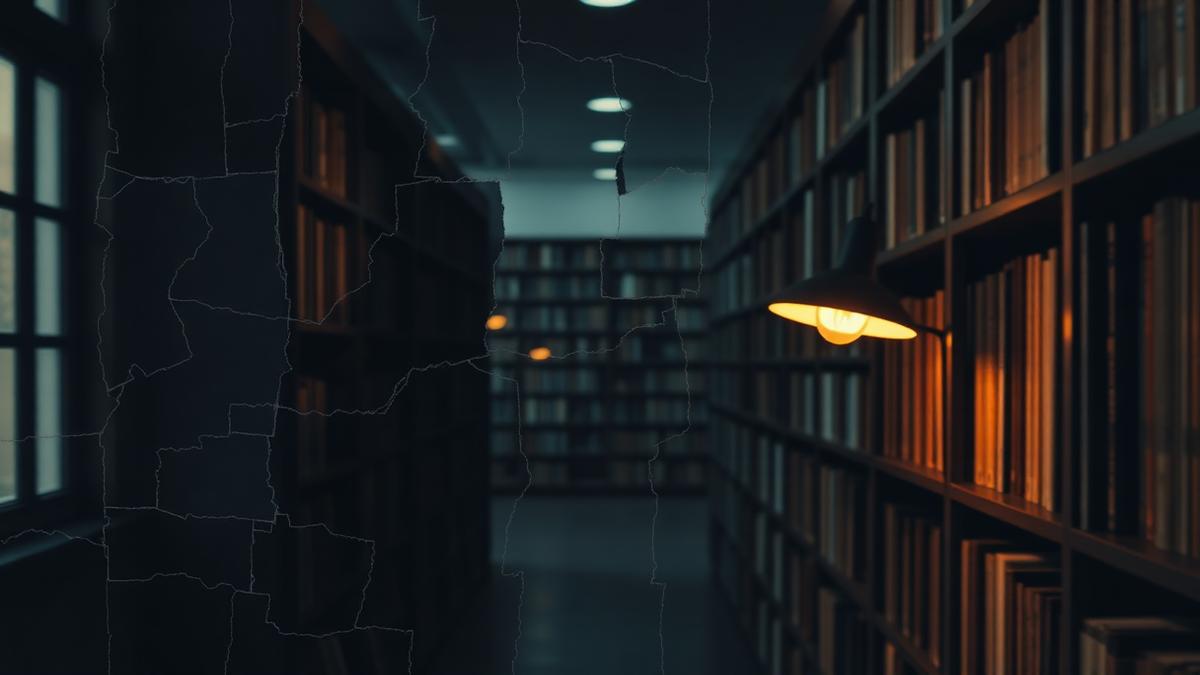
It is easy to assume that anything published online exists forever. In practice, the opposite is closer to the truth. Pages disappear when companies fold, when platforms redesign their systems, or when someone simply lets a domain lapse. This slow erosion has a name, link rot, and it has quietly reshaped how much of recent history is actually retrievable.
What link rot actually looks like
Link rot rarely happens all at once. A news article cited in an old essay might still exist, but the link structure of the site has changed, so the old address leads nowhere. A forum post that answered a specific technical question might vanish when the forum's owner stops paying for hosting. Multiply these small losses across millions of pages, and a meaningful share of the internet from even a decade ago is already gone or unreachable.
Researchers who study this phenomenon have found that citations in academic papers, court decisions, and news articles decay at a striking rate, with a significant portion of referenced links becoming dead within just a few years of publication. That decay is largely invisible until someone tries to follow a citation and finds nothing there.
Why this matters beyond nostalgia
It is tempting to treat link rot as a minor inconvenience, the digital equivalent of a misplaced newspaper clipping. But the stakes are higher than nostalgia. Legal opinions cite sources that may vanish. Journalism relies on primary documents that can disappear before a story is fully understood. Personal and cultural history, from early blogs to the first wave of online communities, exists nowhere else but on servers that no one is obligated to maintain.
Unlike a library, which has a clear institutional mandate to preserve its collection, most of the internet has no such mandate. A company can shut down a product, and years of user-generated content can disappear with barely any notice, because nothing legally requires it to be kept.
Efforts to fight the erosion
- Nonprofit archiving projects crawl and snapshot web pages, building a searchable record of how sites looked over time.
- Some publications now maintain their own permanent archives specifically to guard against losing their own history.
- Individual archivists and hobbyists save copies of niche sites, forums, and communities that would otherwise have no institutional backer.
The limits of preservation
Even the best archiving efforts are incomplete. Automated crawlers cannot always capture pages that require logins, that load content dynamically, or that are blocked by a site's own settings. Video, audio, and interactive media are especially difficult to preserve faithfully, since the tools used to create them change quickly and old formats can become unreadable even when the files themselves survive.
There is also a funding problem. Preservation work is rarely profitable, and the organizations doing the most consistent work rely heavily on donations and volunteer effort. This leaves an odd asymmetry: producing digital content has never been cheaper, but preserving it responsibly remains expensive and thankless.
What individuals can do
Preservation does not have to be left entirely to institutions. Saving personal copies of important pages, using archiving tools before sharing a link in something meant to last, and supporting the organizations doing this work are all small but meaningful actions. Writers and publishers can also help by choosing stable, durable link structures and by avoiding unnecessary redesigns that break years of existing references.
For readers who care about how digital culture is remembered and studied over time, this is a subject worth following closely, and it connects to broader questions covered in our culture coverage.
A quieter kind of loss
Unlike the destruction of a physical archive, which tends to be sudden and visible, the loss of digital history happens gradually and mostly unnoticed. There is no single dramatic event to mark it, just an accumulating silence where links used to lead somewhere. Recognizing that silence, and choosing to do something about it, may be one of the more important quiet responsibilities of living through an era that produces more information than any before it, while preserving surprisingly little of it well.
About the author
Mara Devlin edits the publication and writes about the internet's infrastructure and incentives. She spent a decade as a technology reporter and editor before founding this masthead, and still does most of her reporting by reading documentation nobody else wants to read.