The Slow Return of Physical Media
Vinyl, film cameras and printed books were supposed to be relics of a pre-digital age, yet each has found a stubborn, growing audience that streaming and cloud storage never fully satisfied.
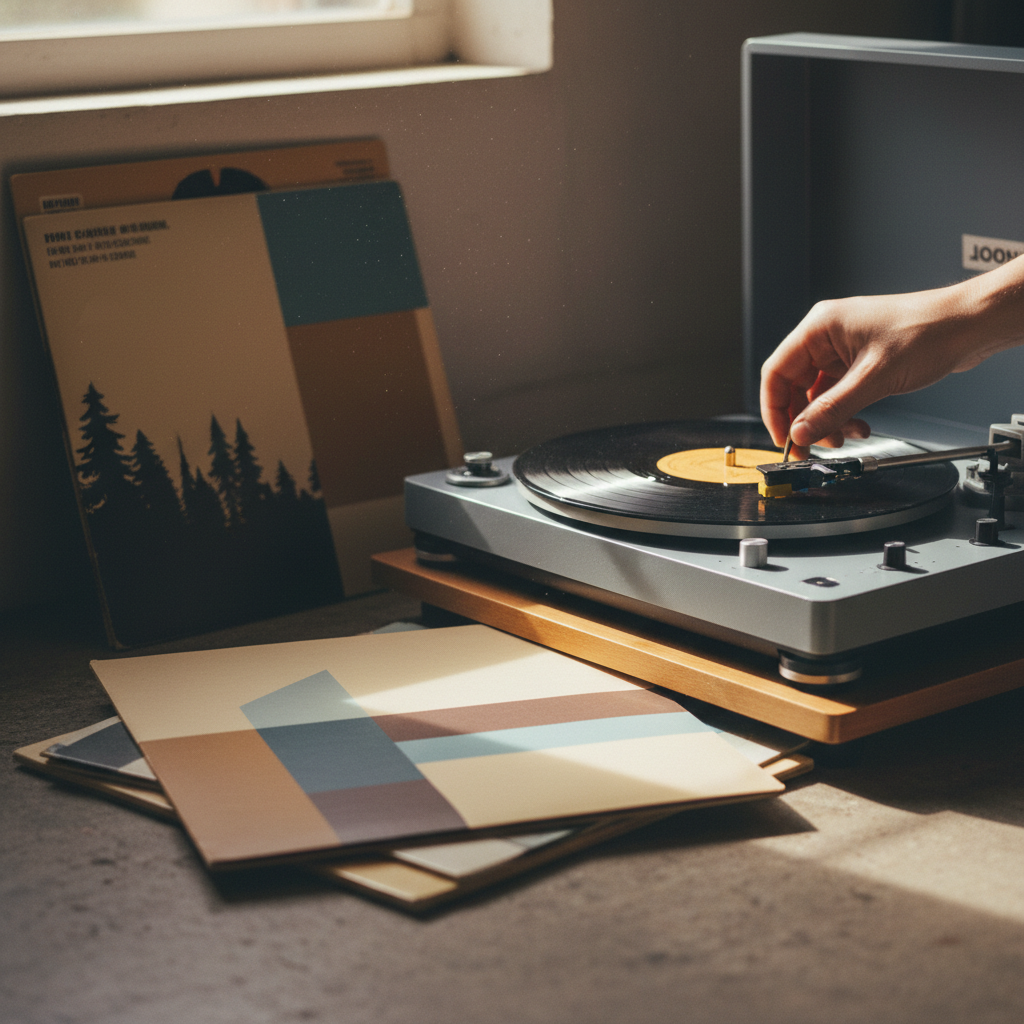
For a while it looked like a foregone conclusion. Streaming would replace ownership, cloud storage would replace shelves, and formats like vinyl, print and film would settle into a small niche kept alive purely by collectors and nostalgists. That has not quite happened. Vinyl records have posted years of consecutive sales growth in several major markets, independent bookshops have expanded rather than vanished in many cities, and film cameras, some decades old, have become genuinely difficult to find secondhand at reasonable prices because demand has outpaced the trickle of supply. None of this has reversed the dominance of digital formats, but it has proven that physical media's decline was not the simple, one-directional story it was assumed to be.
Ownership means something digital access does not
The most consistent argument physical media advocates make is also the simplest: owning a copy of something is different from having access to it. A streaming subscription can lose a title overnight due to a licensing dispute, a platform can shut down entirely and take a purchased digital library with it, and an algorithm can quietly deprioritise content a listener or viewer once relied on finding easily. A record on a shelf, a book on a shelf, or a photograph on a roll of processed film does not depend on a company's continued existence, business model or server uptime. That durability has become more persuasive as consumers have accumulated direct experience of digital libraries disappearing or becoming harder to access than they once were.
This is not an abstract concern. Digital storefronts have removed purchased content from customer libraries, streaming catalogues rotate constantly as licensing deals expire, and cloud services have shut down with comparatively short notice to affected users. Physical media sidesteps all of this by design, at the cost of the convenience digital formats were built to provide.
Attention is the real scarce resource
A second, less discussed driver is the sheer abundance of digital content itself. A streaming music or video library effectively offers infinite choice, and infinite choice has a genuine psychological cost: decision fatigue, shallow engagement, and a tendency to skip rather than commit to any single piece of content for very long. Physical formats impose friction that digital ones deliberately removed, and for a growing number of people that friction has become a feature rather than a flaw.
Putting a record on requires walking to a shelf, choosing an album deliberately, and committing to listening through a side without easily skipping to something else. Reading a printed book removes the notifications, tabs and autoplay prompts that compete for attention on a screen. Shooting a roll of film, with a fixed and limited number of exposures, forces a level of intention before pressing the shutter that a smartphone camera, capable of near-unlimited free shots, does not require at all. In each case, the format's limitations are doing something digital convenience actively undermines: encouraging sustained, singular attention.
The ritual matters as much as the object
Beyond ownership and attention, much of physical media's appeal is bound up in ritual, the sequence of small physical actions that surround using the format. Removing a record from its sleeve, cleaning it, placing the needle, waiting for the first crackle before the music starts: none of this improves the audio fidelity in a way most listeners could reliably detect, but it transforms listening from a passive background activity into a deliberate event with a beginning and an end. Similar rituals surround print, from the specific feel and smell of a new book to the visible, physical evidence of progress a bookmark provides, something a digital reading percentage indicator does not replicate in quite the same way.
These rituals are not purely nostalgic performances by people who remember the pre-digital era. A significant share of the growth in vinyl and print sales has come from younger buyers with no lived memory of a time before streaming, suggesting the appeal is not simply generational nostalgia but a genuine, freshly discovered preference for formats that behave differently from a phone screen.
What draws different audiences to different formats
- Vinyl: tactile ritual, large-format cover art, a fixed listening sequence per side
- Printed books: no screen fatigue, physical evidence of progress, resale and lending value
- Film photography: forced intentionality, a distinctive look, a finite and irreversible process
- Printed magazines and zines: curation by an editor rather than an algorithm, tactile design
The economics are stranger than they look
Physical media's resurgence has not been cheap for consumers, and that is itself revealing. Vinyl records typically cost considerably more than a month of unlimited music streaming, film and processing costs have risen as manufacturing consolidated around fewer suppliers, and printed books cost more to produce and ship than a digital edition of the same title. Buyers are, in each case, paying a real premium for a format that offers less convenience than the digital alternative available to them. That willingness to pay more for less convenience is one of the clearest signals that something beyond simple practicality is driving the trend.
Manufacturing capacity has struggled to keep pace with demand in several of these categories. Vinyl pressing plants, many of which closed or scaled down dramatically during the format's lowest years, have had to be rebuilt or expanded, creating long lead times for new releases even as demand climbed. Film manufacturing faced a similar squeeze, with some emulsions discontinued during the format's decline now difficult or impossible to bring back at previous production scale, permanently narrowing the range of film stocks available even as demand for any film at all has recovered.
Physical versus digital: what each format actually offers
| Consideration | Physical media | Digital/streaming |
|---|---|---|
| Continued access | Guaranteed regardless of company changes | Dependent on licensing and platform survival |
| Upfront cost | Higher per item | Lower, often subscription-based |
| Convenience | Lower, requires physical handling | High, instant and portable |
| Resale or lending value | Retains some value, can be shared | Typically none |
| Curation experience | Deliberate, self-directed | Often algorithm-driven |
Retailers and independent shops adapted rather than folded
Independent record shops and bookshops, widely predicted to be an early casualty of digital distribution, have in many places stabilised or even expanded, partly by leaning into the qualities streaming cannot replicate: knowledgeable staff recommendations, community events, author signings and listening sessions, and a browsing experience built around discovery rather than search. This repositioning has been more successful than simply competing with digital retailers on price or convenience ever could have been, because it plays to strengths a screen genuinely cannot offer.
Large retailers have taken note as well, with some chains expanding vinyl and print sections that had been shrinking for years, responding to demonstrated consumer demand rather than driving it. This is a meaningful reversal from the assumption, common a decade ago, that shelf space for physical formats would simply continue shrinking indefinitely toward zero.
Digital and physical are increasingly complementary, not competing
Perhaps the most accurate way to describe the current landscape is not physical media's revival at streaming's expense, but a settling into complementary roles. Many consumers now stream music constantly for discovery and convenience while buying vinyl specifically for albums they already know they love, treating the physical purchase almost like a deliberate act of support or commemoration rather than a primary listening method. Similarly, many committed print readers also read digitally, choosing print for books they want to own, annotate or display, and digital for lighter, more disposable reading.
This complementary pattern suggests physical media's return is not a rejection of digital convenience so much as an addition to it, filling a role streaming and digital files were never well suited to provide: durable ownership, deliberate ritual and a physical object that exists independent of any company's continued goodwill.
Gift-giving and display culture reinforce the trend
Physical formats also benefit from a social function digital files cannot replicate: they work as gifts and as visible signals of taste. A record, a book or a printed photograph can be given, displayed on a shelf, or lent to a friend in a way that a streaming subscription or a digital file simply cannot. This visible, shareable quality has fed into a broader culture of curated physical collections, where a bookshelf or record collection functions partly as a form of self-presentation, something a folder of digital files, hidden inside a device, was never able to do in quite the same way.
Not every format has recovered equally
It is worth noting that this resurgence has been uneven across formats. Compact discs, despite once occupying a market position between vinyl's tactile appeal and digital's convenience, have not seen anything like the same renewed enthusiasm, in part because they lack both vinyl's large-format artwork and ritual and digital's convenience, leaving them without a clear audience once streaming matured. DVDs and other physical video formats have followed a broadly similar pattern, with only a smaller collector-driven market for special editions and titles that have disappeared from major streaming catalogues persisting at any real scale. This unevenness suggests the physical media revival is not a blanket rejection of digital convenience but a specific, format-by-format response to what each medium's ritual and object qualities can uniquely offer.
What the trend says about consumer behaviour more broadly
The endurance of physical formats offers a useful corrective to the assumption that consumer behaviour moves in one direction toward maximum convenience and never back. Convenience is a powerful force, but it is not the only one shaping what people choose to buy and use, and the last decade has shown a genuine, sustained appetite for formats that are slower, more expensive and less flexible than the digital alternative, precisely because those constraints deliver something digital convenience cannot: permanence, intention and a tangible relationship with the things people choose to keep. For more on how habits and technology reshape culture, see culture.
About the author
Mara Devlin edits the publication and writes about the internet's infrastructure and incentives. She spent a decade as a technology reporter and editor before founding this masthead, and still does most of her reporting by reading documentation nobody else wants to read.