How websites measure performance and why it matters
A slow website is not just an annoyance, it is a measurable problem with a direct effect on how people use it.
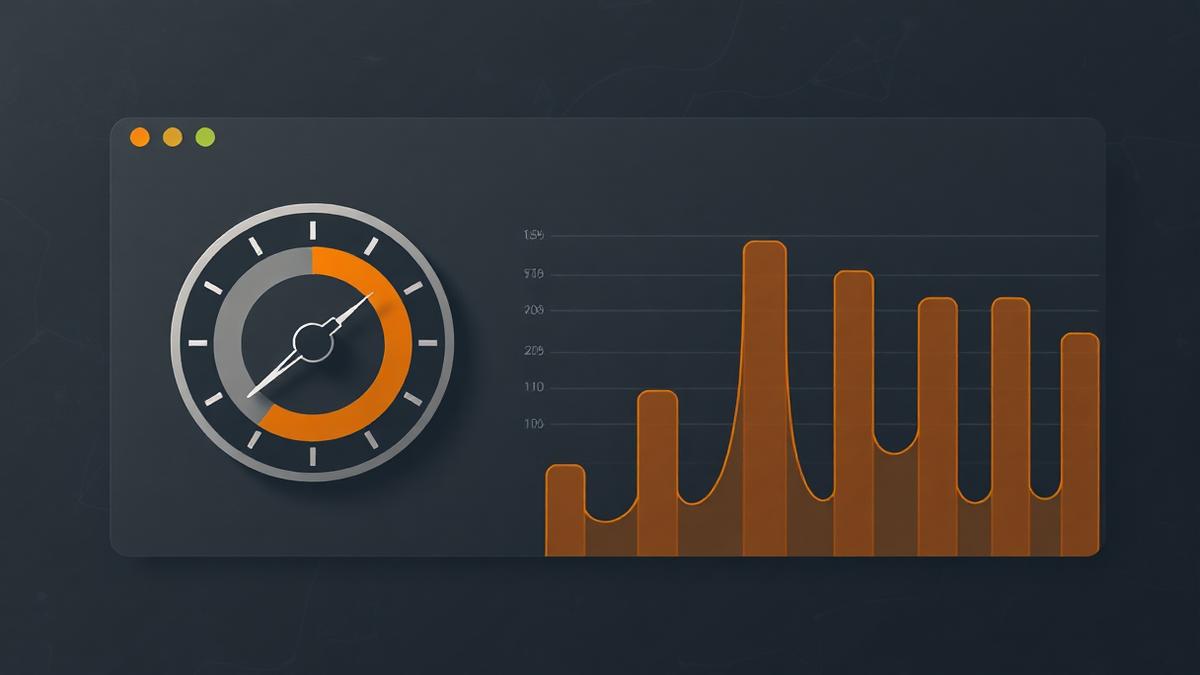
A website that takes a few extra seconds to load might not seem like a serious problem, but it consistently changes how people behave. Visitors leave slow pages more often, engage less once they arrive, and are less likely to complete tasks like a purchase or a signup. Because of this, performance measurement has become a serious discipline, with specific metrics designed to capture the parts of speed that actually affect real users.
Why raw load time is not enough
Early performance measurement focused on total page load time, the moment every resource on a page had finished loading. This turned out to be a poor proxy for actual user experience, because a page can display its main content quickly while a hidden script or a small tracking pixel continues loading in the background for several more seconds. Someone using the site would not perceive that lingering activity as slowness at all.
Metrics that reflect real experience
Modern performance measurement instead focuses on specific moments that correspond to what a person actually experiences. Some of the most widely used include:
- Largest contentful paint, which measures how long it takes for the main visible content to appear
- First input delay or its successors, which measure how quickly a page responds to the first interaction, like a click or a tap
- Cumulative layout shift, which measures how much content unexpectedly moves around while the page is loading, a common source of frustration
- Time to first byte, which measures how quickly a server starts responding at all
Together, these give a much more accurate picture of how a page feels to use than a single load time figure ever could.
Lab data versus real-world data
Performance can be measured in two different ways, each useful for different purposes. Lab data comes from controlled tests run under consistent conditions, which makes it useful for comparing changes over time in a predictable environment. Real-world data, sometimes called field data, comes from actual visitors using the site on their own devices and connections, which captures the messy variety of real conditions but is harder to use for controlled comparisons. Serious performance work generally uses both.
Why performance affects behaviour so strongly
Human attention has limited patience for waiting, and this shows up consistently across studies of user behaviour on the web: pages that load noticeably faster see higher engagement and lower rates of visitors leaving immediately. This is not simply a matter of preference; delays interrupt the sense of direct control that makes digital interfaces feel responsive, and that interruption has a measurable cost.
Common causes of poor performance
| Cause | Typical effect |
|---|---|
| Unoptimised images | Slower loading of visible content |
| Excessive third-party scripts | Delayed responsiveness and layout shifts |
| Poor server response time | Delay before anything begins loading at all |
| Render-blocking resources | Content appears later than necessary |
What this means beyond individual sites
Performance measurement is also connected to broader questions about how the web functions, including what happens technically between typing a URL and seeing a page appear, a process covered in more depth elsewhere in our internet coverage. Every stage of that process is a potential point where performance can be measured and improved.
Why this matters even if you never build a website
Understanding performance measurement helps explain everyday frustrations, like why one site feels instantly responsive while another with similar content feels sluggish. It is rarely about the amount of content on a page and much more about how carefully that content and its supporting scripts have been engineered to appear in a way that matches how people actually perceive speed.
About the author
Mara Devlin edits the publication and writes about the internet's infrastructure and incentives. She spent a decade as a technology reporter and editor before founding this masthead, and still does most of her reporting by reading documentation nobody else wants to read.