How an Online Payment Actually Clears
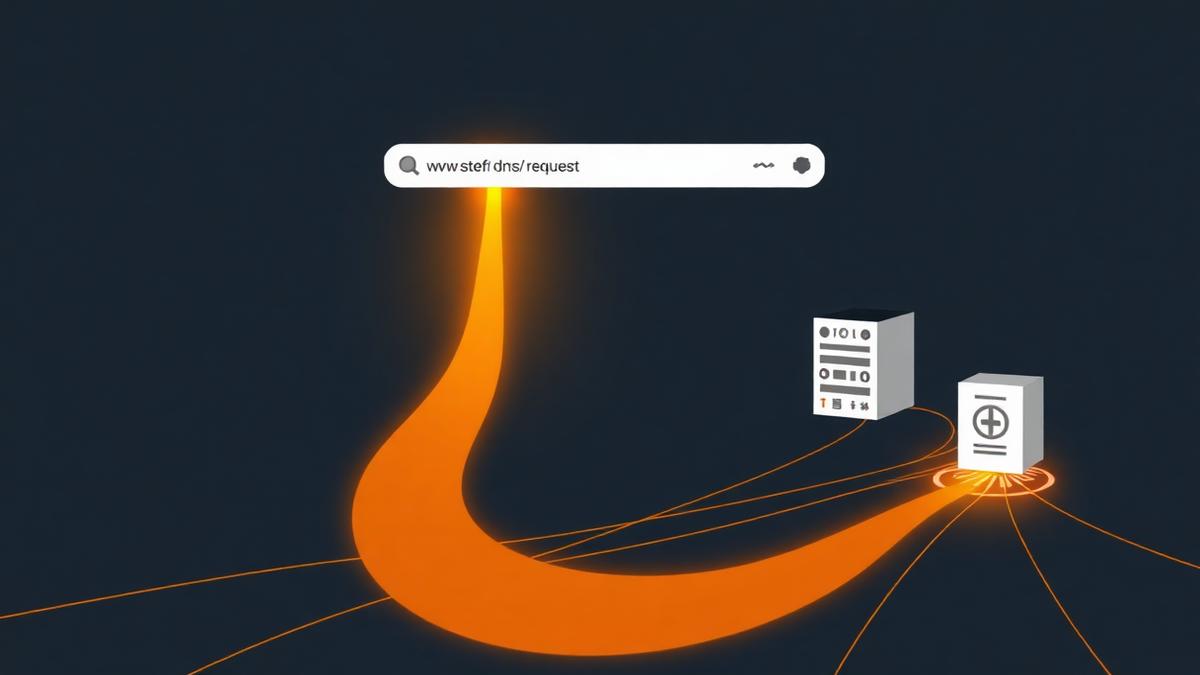
Tapping "pay now" feels instant, but behind that single click sits a relay of checks passing between several separate institutions.

An online purchase looks deceptively simple from the shopper's side: enter card details, click a button, see a confirmation message a second or two later. It is easy to assume that money has moved directly and instantly from buyer to seller in that moment. In reality, that single click sets off a rapid relay between several separate organisations, each with its own job, and the confirmation message appears before most of the actual settling of funds has even happened. Understanding that relay makes sense of a lot of otherwise confusing payment behaviour, from why a purchase can be declined for no obvious reason, to why refunds take days rather than seconds.
The main participants in a card payment
A typical online card payment involves at least five distinct parties, even though the shopper only ever interacts directly with one of them.
- The cardholder: the person making the purchase.
- The merchant: the online shop selling the goods or service.
- The payment gateway or processor: the technical service the merchant uses to securely capture and transmit card details.
- The acquiring bank: the merchant's bank, which receives the payment on the merchant's behalf.
- The issuing bank: the cardholder's own bank, which actually holds the money and decides whether to approve the transaction.
Sitting between the acquiring and issuing banks is a card network, the organisation that operates the rails connecting essentially all banks that issue cards of a particular type, routing messages between them at enormous speed and scale.
What happens in the moments after you click "pay"
When a shopper submits payment details, the merchant's website does not usually handle the sensitive card information directly, for both security and regulatory reasons. Instead, it hands that information, in an encrypted form, to a payment gateway, which acts as a secure intermediary. The gateway forwards the transaction details to the merchant's acquiring bank, which passes the request along the card network to the cardholder's issuing bank.
The issuing bank then runs a rapid set of checks: is the card active and not reported lost or stolen, is there sufficient available balance or credit, does the transaction pattern look consistent with the cardholder's usual behaviour, and does anything about the transaction resemble known fraud patterns. Based on these checks, the issuing bank sends back either an approval or a decline, and that response travels back along the same chain to the merchant's site, which then shows the shopper a confirmation or a rejection.
Why this all happens in about a second
This entire round trip, crossing multiple institutions and involving genuine risk assessment, typically completes in well under two seconds. This is possible because the messages exchanged are small, highly standardised, and travel across purpose-built financial networks engineered specifically for this kind of rapid exchange, rather than over the general public internet in the way a typical web page loads.
Authorisation is not the same as settlement
The approval a shopper sees at checkout is what is known as authorisation: the issuing bank has confirmed the transaction looks valid and has set aside the funds, but the actual movement of money between banks, known as settlement, generally happens later, often in a batch process run once or a few times a day. This is why a purchase can appear as a "pending" transaction on a bank statement before it later appears as a finalised charge, and it is also why a merchant that never completes an order can reverse an authorisation without the money ever having genuinely changed hands in the first place.
A simplified view of the payment steps
| Step | What happens | Who is involved |
|---|---|---|
| 1. Capture | Card details entered and encrypted | Shopper, merchant site, payment gateway |
| 2. Request | Transaction details forwarded for approval | Gateway, acquiring bank, card network |
| 3. Authorisation | Issuing bank checks and approves or declines | Issuing bank |
| 4. Confirmation | Response returned to merchant and shopper | All parties, near-instantly |
| 5. Settlement | Funds actually move between banks | Acquiring bank, issuing bank, typically later |
Why payments sometimes get declined for no obvious reason
Declines are one of the most confusing parts of this process for shoppers, since a card that clearly has sufficient funds can still be declined. This often comes down to the issuing bank's fraud detection systems flagging something about the transaction as unusual, such as an unfamiliar merchant, an amount that departs sharply from the cardholder's typical spending, or a delivery address that does not match the billing address on file. These systems are deliberately cautious because the cost of missing genuine fraud is generally judged to outweigh the inconvenience of occasionally declining a legitimate purchase, though this trade-off is obviously frustrating on the receiving end.
Where security fits into all of this
Several layers of protection operate throughout this process, largely invisible to the shopper. Card details are encrypted from the moment of entry so that the merchant's own systems typically never see or store the raw card number. Card networks and processors continuously run fraud detection models that assess transactions against known patterns. For many online purchases, an additional identity verification step, sometimes involving a one-time code sent to the cardholder's phone or a prompt within a banking app, adds a further check that the person completing the purchase is genuinely the cardholder, not someone who has merely obtained the card details.
Why merchants rarely handle raw card numbers themselves
Storing and transmitting raw card numbers carries substantial security and regulatory obligations, so most online merchants deliberately avoid it by relying on a payment gateway to handle that sensitive data instead, receiving back only a token or reference rather than the card details themselves. This significantly limits the damage that could result if a merchant's own systems were ever compromised, since there would be no actual card numbers stored there to steal.
What happens with a refund
A refund essentially reverses this process, but it is not instantaneous in the way the original payment appeared to be. The merchant instructs its payment gateway to reverse the charge, which is passed back along the same chain to the issuing bank, which then credits the cardholder's account. Because this involves several institutions coordinating rather than a single direct reversal, and because settlement schedules vary, refunds commonly take several business days to appear, even though the initial charge appeared to happen instantly.
Practical takeaways for anyone shopping or selling online
- A payment being "approved" at checkout is not the same as money having fully changed hands; settlement happens separately, usually later.
- Unexpected declines are often the result of automated fraud checks rather than any actual problem with the card, and contacting the issuing bank directly is usually the fastest way to resolve one.
- Merchants that rely on established, reputable payment gateways are generally reducing their own security exposure by not handling raw card data directly.
- Refunds taking several days is normal and expected, given how many separate institutions are involved in reversing a transaction.
- Additional verification steps at checkout, while occasionally inconvenient, exist specifically to protect cardholders from unauthorised use of their card details.
Why this matters beyond curiosity
Online payments are one of the internet's quietest but most consequential achievements: a system that lets a stranger on one continent reliably and securely pay a stranger on another within seconds, with a chain of institutions cooperating to make that possible without either party needing to trust the other directly. The apparent simplicity of clicking "pay now" is the product of decades of engineering and standardisation between banks, card networks and technology providers who mostly never interact with the shopper at all. Recognising the machinery behind that single click makes the occasional delay, decline or slow refund considerably easier to understand, and considerably less mysterious.
About the author
Helena Vos writes about media, culture and how small businesses actually operate. She previously worked in independent publishing, which is where she learned to distrust round numbers and unsourced statistics.