How Video Streaming Quietly Adapts to Your Connection
The smooth playback of an online video hides a constant, second-by-second negotiation between your device and a distant server.
Start a video on almost any modern streaming service and, within a second or two, it begins to play. There is no long wait for the whole file to download, and if you scrub forward to the middle, playback picks up almost immediately there too. This convenience is easy to take for granted, but it depends on a genuinely clever piece of engineering that has quietly become one of the internet's most important technologies: adaptive streaming.
Why streaming a whole file at once does not work
In the earliest days of online video, a common approach was to make the viewer download the entire file before playback could begin, or to stream one continuous file at a single fixed quality. Both approaches have obvious problems. Waiting for a full download is frustrating, especially for longer videos, and streaming at one fixed quality means the video will either look worse than necessary for someone with a fast connection, or will constantly stall and buffer for someone with a slower one. Since internet connection speeds vary enormously between people, and even vary for the same person from one minute to the next as they move around or as network congestion changes, a single fixed approach could never serve everyone well.
Breaking video into small pieces
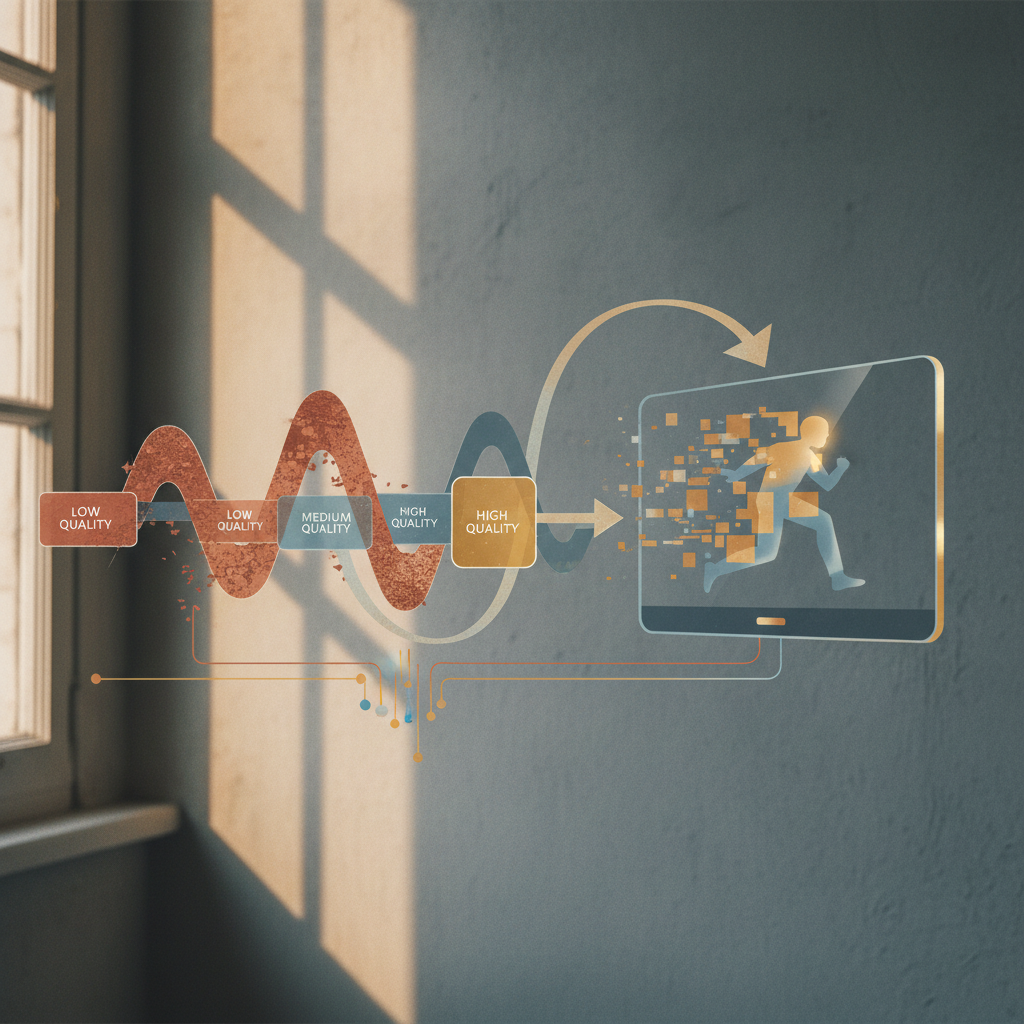
The solution that most streaming services now use is to break a video into many short segments, typically a few seconds long each, and to encode each segment at several different quality levels in advance. A single video might exist, ready and waiting on a server, as a low-resolution version, several middling versions, and one or more high-resolution versions, all cut into matching short segments.
When you start watching, your device requests the first segment at a quality level it judges appropriate for your current connection, often starting conservatively to avoid an early stall. As playback continues, your device measures how quickly each segment actually arrives, calculates an estimate of your available bandwidth, and uses that estimate to choose the quality level for the next segment. If your connection is fast and stable, the choice climbs to a higher quality. If it detects that segments are arriving slowly, it drops back down to a lower quality rather than let playback stall.
Why this feels invisible
Because each segment is only a few seconds long, this adjustment happens constantly and, ideally, imperceptibly. A viewer on a train passing through an area of poor signal might unknowingly be watching a noticeably lower-resolution stream than the same video would show at home on a stable connection, purely because the system is protecting continuous playback over visual sharpness. Most viewers would rather see a slightly softer picture than watch the video freeze and spin a loading icon, and adaptive streaming is built entirely around that assumption.
The role of buffering, properly understood
The word "buffering" has become synonymous with frustration, but a buffer is actually the mechanism that prevents most frustration, not the cause of it. A buffer is a short stretch of already-downloaded video held in reserve ahead of the point currently playing. As long as new segments keep arriving faster than they are being played back, the buffer stays comfortably full and playback continues uninterrupted, even through brief dips in connection speed. The visible spinning icon that people call "buffering" actually represents the buffer running empty: the system has been unable to fetch new segments quickly enough to keep pace with playback, and it has no choice but to pause and wait.
Balancing buffer size against responsiveness
Streaming services must strike a careful balance in how large a buffer to build up before considering playback safe to continue. A very large buffer offers strong protection against connection interruptions but also means more time spent waiting before playback starts, and more wasted data if a viewer stops watching early, since segments the person never actually watched will already have been downloaded. A very small buffer starts playback almost instantly and wastes little data, but offers much less protection against a sudden dip in connection quality. Most services tune this balance dynamically, adjusting how aggressively they buffer based on how stable a connection has proven so far.
How this scales globally: content delivery networks
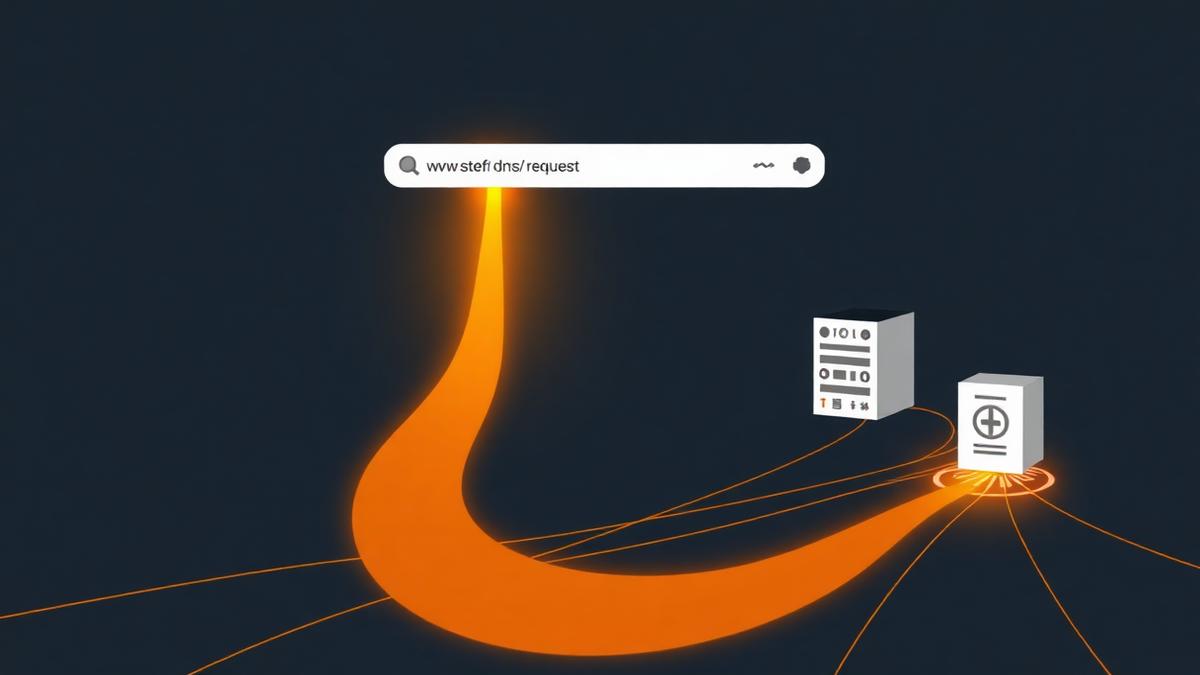
Adaptive quality is only part of the picture. Delivering video quickly to people scattered across the world also depends on where the video is physically stored. Rather than serving every request from one central location, streaming services distribute copies of their content across many servers positioned in different regions, in a system generally called a content delivery network. When someone requests a video, their device is typically directed to a nearby server rather than one on the other side of the world, which reduces the physical distance the data has to travel and therefore reduces delay and the likelihood of interruptions.
This distributed structure and the segment-based adaptive approach work together. A nearby server reduces the baseline delay and improves the chances of fast, consistent delivery, while adaptive streaming handles the remaining variability caused by local network conditions, whether that is a crowded home network, a weak mobile signal, or general internet congestion at a particular time of day.
A simplified look at typical quality tiers
| Approximate quality | Typical use case | Roughly how demanding on connection |
|---|---|---|
| Low resolution | Weak mobile connections, background audio-focused viewing | Low |
| Standard resolution | Everyday viewing on modest connections | Moderate |
| High resolution | Home broadband, larger screens | High |
| Very high resolution | Fast, stable connections, premium content | Very high |
Why quality sometimes drops even on a "good" connection
A connection that seems perfectly fast for browsing can still cause a streaming service to lower video quality, because the system reacts not just to raw speed but to consistency and to what else is happening on the same network at the same time. Several devices in a household streaming simultaneously, a large background download running unnoticed, or brief congestion on a shared local network can all cause momentary dips that the adaptive system responds to cautiously, even if the connection recovers a moment later. This is one reason quality can fluctuate noticeably during a single viewing session without any obvious external cause.
What viewers can actually influence
Although most of this happens automatically, viewers are not entirely without control. Several practical choices genuinely affect streaming quality and reliability.
- Using a wired connection rather than a shared wireless one reduces variability, particularly in busy households.
- Closing other bandwidth-heavy applications, such as large downloads, frees up capacity for smoother streaming.
- Manually selecting a lower quality setting in advance can prevent the system from repeatedly climbing to a quality your connection cannot sustain, which sometimes causes more visible stuttering than starting lower and staying stable.
- Positioning a wireless router closer to a viewing device, or reducing physical obstructions between them, can meaningfully improve consistency.
Why this matters beyond entertainment
The same underlying principles, adaptive delivery based on real-time conditions and distributed servers positioned close to users, now underpin far more than entertainment streaming. Video calls, live sports broadcasts, and even some forms of software delivery on the internet borrow heavily from techniques originally refined for on-demand video. Understanding how streaming adapts, therefore, is a reasonable window into a much broader set of engineering decisions that quietly shape how reliably the internet delivers real-time experiences generally.
Closing thought
The next time a video briefly softens in quality or a small loading icon appears for a moment before playback resumes, it is worth recognising that as a system working correctly rather than failing. A short dip in resolution or a brief pause to rebuild the buffer is the visible evidence of an enormous amount of invisible negotiation happening every few seconds, all in service of the one thing viewers actually care about most: video that keeps playing.
About the author
Idris Oyelaran covers consumer technology, privacy and applied science. He is happiest explaining a complicated system in ordinary language, and he tests every recommendation on his own devices before it appears in a story.