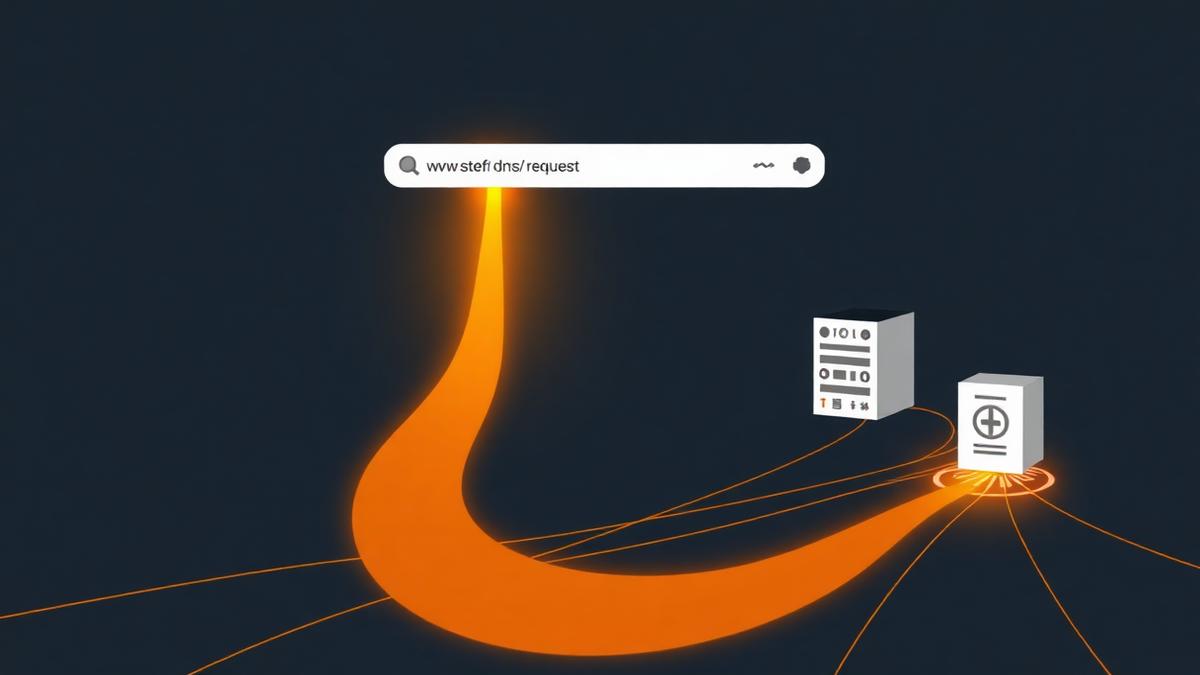
How Search Engines Crawl and Rank the Web
Behind every search box sits a vast, quietly running machine that reads the internet so you do not have to.

Type a question into a search box and an answer appears in well under a second. It feels instantaneous, almost magical, as if the engine has reached out across the entire internet in real time and picked the best pages just for you. It has not. What actually happens is closer to consulting an enormous, constantly updated library catalogue that was assembled long before you typed anything at all. That catalogue is the product of three distinct jobs: crawling, indexing, and ranking. Each one is worth understanding, because together they decide which businesses get customers, which writers get readers, and which ideas get seen.
The crawler: a tireless, methodical visitor
A web crawler, sometimes called a spider or a bot, is a program that visits web pages automatically, reads their content, and follows the links it finds there to discover more pages. It starts from a list of known addresses and a queue of previously seen links, then works outward, hopping from page to page much as a person might click through a website out of curiosity, except doing so millions of times a second across many machines simultaneously.
Crawlers are polite, or at least they are supposed to be. They read a file called robots.txt that site owners place at the root of their domain, which specifies which sections of the site may or may not be crawled. They also try not to overwhelm a server with requests, spacing out their visits so a small website is not knocked offline by the sheer volume of automated traffic. Even so, crawling the web is an unfinishable task. New pages are published every second, old ones vanish, and content changes constantly, so crawlers must make constant decisions about what to revisit and how often.
Why some pages never get crawled
Not every page that exists ends up in a search engine's catalogue. A page might be blocked by robots.txt, buried so deep in a site's structure that no links point to it, or simply too new for the crawler to have found yet. Pages behind logins, pages generated only in response to a search box on the site itself, and pages that require complex interaction to load their content can all be effectively invisible to crawlers, even though a human visitor could reach them easily.
The index: turning pages into searchable data
Once a page is fetched, it is not simply filed away as a copy of itself. It is processed into an index: a structured representation of the words it contains, where those words appear, how they relate to headings and links, and various signals about the page's structure and meaning. This is conceptually similar to the index at the back of a textbook, except instead of a handful of terms pointing to page numbers, it maps essentially every meaningful word and phrase on the web to every location where it occurs.
Modern indexing also tries to understand meaning rather than just matching literal words. A search for "affordable family cars" should reasonably surface a page that talks about "budget vehicles for parents" even though none of the words match exactly. This requires the engine to build some model of how concepts relate to one another, learned from patterns across enormous amounts of text.
Ranking: deciding what matters most
Crawling and indexing answer the question of what exists. Ranking answers the much harder question of what is best, for this particular searcher, at this particular moment. A single search query can match millions of pages, and only a handful will ever be seen, so ranking is where the real competition happens.
Ranking systems weigh a large number of signals together. None of them acts alone, and the exact combination is not published in full by any major search engine, partly to prevent it being gamed and partly because the systems have become genuinely complex. Broadly, though, the signals fall into a few recognisable groups.
- Relevance signals: how closely the words and topics on a page match what the searcher seems to be asking for.
- Authority signals: how many other credible pages link to this one, and how trustworthy those linking pages are themselves.
- Quality and usability signals: whether a page loads quickly, displays properly on a phone, and is free of intrusive obstacles between the visitor and the content.
- Freshness signals: for topics where recency matters, such as news or product prices, whether the information is current.
- User behaviour signals: patterns suggesting that people who land on a page find what they were looking for, rather than immediately returning to try a different result.
These factors are combined by models that have been trained and refined over many years, and they change constantly as search engines run experiments to see which combinations produce results people find genuinely useful.
Why links still matter
One of the oldest and still most influential ranking ideas is that a link from one page to another functions somewhat like a vote of confidence. If many well-regarded sites link to a page, that page is probably worth something. This insight, decades old now, is why the practice of earning links through genuinely useful content remains more durable than trying to manufacture links artificially, a practice most search engines actively try to detect and penalise.
What this means for the people building websites
For anyone publishing on the internet, understanding this pipeline changes how you think about visibility. A page cannot rank if it is never crawled, cannot be matched to a query if it is poorly indexed, and cannot win a competitive search if it offers no compelling reason to be ranked above the alternatives. This has given rise to an entire discipline, often called search engine optimisation, dedicated to making pages easier to crawl, clearer to index, and more deserving of a high rank.
Good practice in this area overlaps heavily with simply making a good website. Clear structure with sensible headings helps both human readers and crawlers understand a page. Fast loading times help visitors stay rather than leave in frustration, which in turn signals quality. Genuinely informative content that answers a question thoroughly tends to attract the kind of natural links that build authority over time.
The temptation to game the system
Because so much commercial value rides on search visibility, there is a long history of attempts to trick ranking systems: stuffing pages with repeated keywords, buying links in bulk, or generating vast quantities of thin, low-value content in the hope that some of it ranks. Search engines invest heavily in detecting these tactics because a search engine that returns low-quality results loses the trust of the people using it, which is its entire reason for existing. The practical lesson is that these tricks tend to work only briefly, if at all, and the risk of a page or entire site being penalised generally outweighs any short-term gain.
A simplified comparison of what crawlers can and cannot easily see
| Content type | Typically easy to crawl | Often difficult to crawl |
|---|---|---|
| Plain text and headings | Yes | — |
| Standard links between pages | Yes | — |
| Content behind a login | — | Yes |
| Content loaded only after complex interaction | — | Often |
| Pages with no incoming links from elsewhere | — | Yes, hard to discover |
How results keep changing
Search results are not static. The same query can return different results week to week as new pages are published, older pages are updated, and the ranking systems themselves are refined. Search engines run a constant stream of controlled experiments, showing slightly different ranking approaches to small groups of users and measuring whether the changes make people more satisfied with what they find. Over a year, thousands of small adjustments accumulate, which is why strategies that worked well for a website at one point can quietly stop working without any single dramatic change being announced.
Practical takeaways
A few durable principles emerge from all of this, and they are useful whether you run a personal blog or a small business site.
- Make sure your pages can actually be found by a crawler: link to them from elsewhere on your site and avoid unnecessary technical barriers.
- Write clearly and specifically about a topic rather than vaguely around it, since relevance matching rewards precision.
- Invest in genuine usability: fast loading, mobile-friendly layouts, and content that is easy to read.
- Earn links naturally by producing something worth referencing, rather than trying to manufacture authority artificially.
- Expect change. What ranks well today may need revisiting in a year, not because you did anything wrong, but because the web and its evaluators keep moving.
The bigger picture
It is easy to think of search engines as neutral arbiters simply reflecting what exists on the web, but they are also editorial systems making constant judgement calls about quality and relevance at a scale no group of human editors could manage alone. That combination of automation and judgement is what makes the modern web navigable at all. Without it, the sheer volume of information online would be closer to noise than to a resource. The next time an answer appears instantly after a search, it is worth remembering the quiet, continuous work of crawling, indexing, and ranking that made that instant possible.
About the author
Idris Oyelaran covers consumer technology, privacy and applied science. He is happiest explaining a complicated system in ordinary language, and he tests every recommendation on his own devices before it appears in a story.