How Museums Decide What to Display
Only a small fraction of most museum collections is ever on view, and the choices behind what makes the cut reveal as much about institutional priorities as they do about art or history itself.
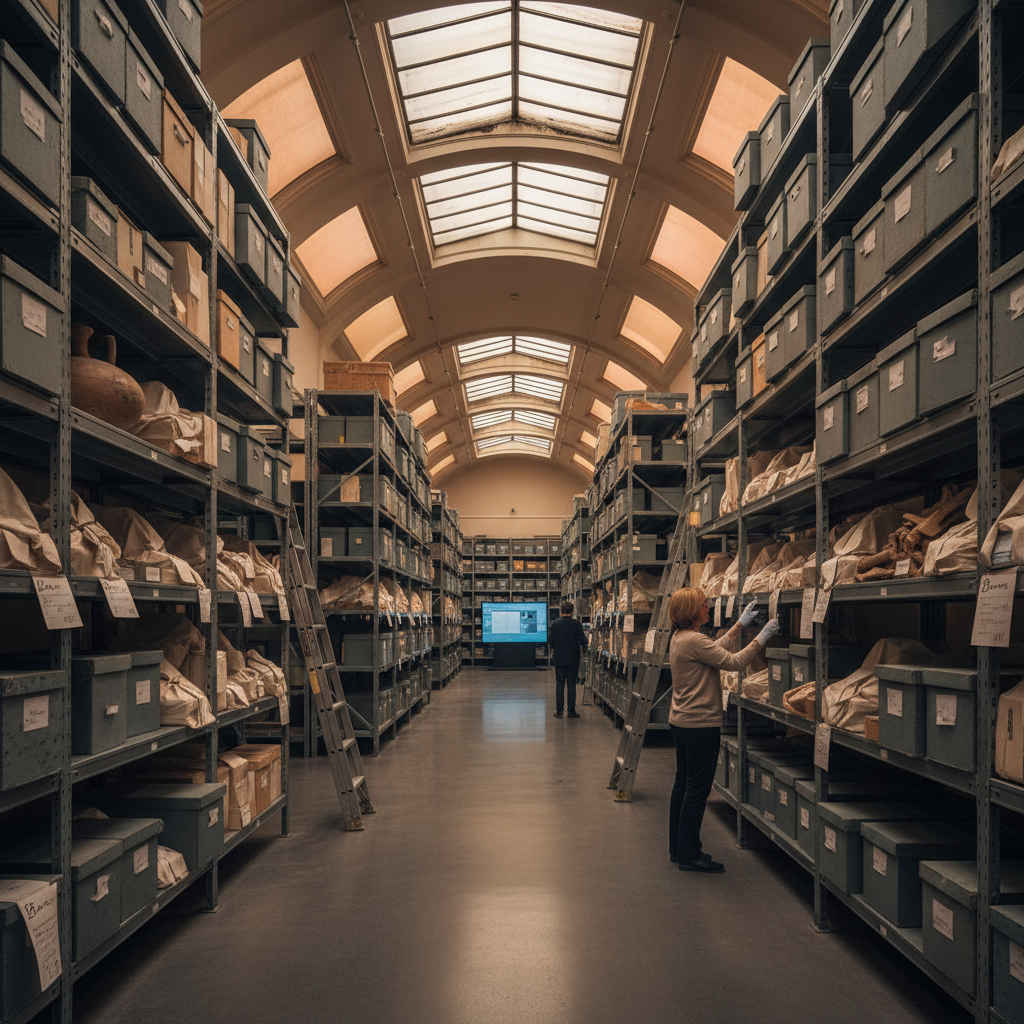
A visitor walking through a major museum sees a curated slice of a much larger, mostly hidden collection. It is common for large museums to have well over ninety percent of their holdings in storage at any given time, meaning what appears on the walls represents a small, deliberately chosen fraction of what the institution actually owns. Understanding how that fraction gets chosen says a lot about what museums are actually for.
Storage is the default state, not the exception
The scale of most museum collections makes full display physically impossible. Large natural history and encyclopaedic art museums often hold millions of objects, specimens, documents and artefacts, accumulated over more than a century of acquisition, donation and excavation. Gallery space, however generous, can only ever accommodate a small portion of that. This means storage is not a temporary holding pattern for objects awaiting display; it is the permanent condition for the vast majority of a collection, some of which may never be exhibited in a given generation.
This has real consequences for how museums are funded and staffed. Collections care, the conservation, cataloguing and environmental control needed to keep millions of stored objects stable, consumes a significant share of many museums' budgets and staff time, even though the public rarely sees this work directly. A specimen or artefact sitting in climate-controlled storage still requires monitoring, and its condition can still change over time if that care lapses.
Conservation limits what can safely go on view
Some objects are excluded from display not because curators consider them uninteresting but because they are physically too fragile for sustained exposure. Light, particularly ultraviolet light, causes cumulative and irreversible damage to organic materials such as textiles, paper, watercolour pigments and dyed fabric. Because this damage accumulates with total light exposure over time rather than being reversible between showings, museums often limit how long certain fragile items can be displayed at all, sometimes rotating a single fragile textile or manuscript back into dark storage after a matter of months to preserve its remaining lifespan for future generations.
This creates a genuine tension between access and preservation. A rarely-seen manuscript or garment might be historically significant enough to justify occasional display, but displaying it too often or for too long shortens its usable life permanently. Curatorial decisions in this space are often less about whether an object deserves to be seen and more about rationing scarce, non-renewable exposure across decades of future exhibitions.
Narrative shapes selection as much as importance does
Display decisions are rarely made object by object in isolation. Most galleries are built around a curatorial narrative, a chosen story about a period, region, artist or theme, and objects are selected based on how well they serve that story, not purely on individual significance. This means two objects of comparable historical or artistic value can have very different display fates depending on whether either fits the current narrative framework a museum has chosen for a given gallery or exhibition.
This narrative-driven approach has shifted considerably over recent decades. Many museums have moved away from purely chronological or nation-by-nation displays toward thematic groupings, comparative displays that place objects from different cultures or periods side by side, and interpretive text that foregrounds context, provenance and, where relevant, the circumstances under which an object was acquired. This shift reflects broader debates within the museum field about whose stories get told and how collections originally assembled during periods of colonial expansion should be presented today.
Common factors weighed in display decisions
| Factor | Effect on display likelihood |
|---|---|
| Physical fragility | Limits total display time, forces rotation |
| Fit with current curatorial narrative | Can outweigh individual object significance |
| Provenance and ownership questions | Can delay or restrict display pending research |
| Public and scholarly demand | Can prompt special loans or temporary exhibitions |
| Available gallery space and climate control | Sets a hard ceiling on how much can be shown |
Provenance research has become a display gatekeeper
An increasingly significant factor in whether an object appears on view is the state of research into how it was acquired. Many museums have expanded provenance research teams whose job is to trace the ownership history of contested objects, particularly items acquired during colonial-era expeditions or under circumstances that would not meet current ethical or legal standards. Some institutions have chosen to pause the display of certain objects while provenance questions are actively being investigated, or to accompany displayed items with detailed interpretive text acknowledging unresolved or troubling acquisition histories rather than presenting the object without that context.
This has led, in a number of high-profile cases, to objects being removed from permanent display and, in some cases, repatriated to their country or community of origin following formal claims and negotiations. These decisions are typically slow, involving legal review, diplomatic negotiation and internal institutional debate, and they represent one of the more consequential ways that display decisions now intersect with wider questions of restitution and historical accountability.
Loans and temporary exhibitions change the picture constantly
Permanent collection displays are only part of the story. Major museums also participate in an extensive network of loans, sending objects to temporary exhibitions elsewhere and borrowing objects from other institutions or private collections for their own temporary shows. This loan system allows a museum to present major exhibitions on subjects for which its own permanent collection is thin, and it lets significant but rarely travelled objects reach audiences who otherwise would never see them.
Loan decisions bring their own set of considerations, including insurance costs, transport risk, and diplomatic sensitivities where objects with contested histories are involved. A loan request for a fragile or symbolically significant object can take years of negotiation, condition assessment and legal paperwork before it results in a single gallery display, which is part of why blockbuster temporary exhibitions are announced so far in advance of opening.
Digitisation as a partial solution
Faced with the reality that most of a collection will likely never be physically displayed, many museums have invested heavily in digitising their holdings, photographing and cataloguing objects for online public databases that anyone can browse regardless of whether the object is currently on a gallery wall. This does not replace the experience of viewing an object in person, particularly for anything where scale, texture or material presence matters, but it does meaningfully widen access to the roughly ninety percent of most collections that remain in storage at any given time.
Digitisation projects are also valuable for scholarship independent of public access, allowing researchers around the world to study high-resolution images and cataloguing data without needing to travel to a specific storage facility, which has accelerated some kinds of comparative and cross-collection research considerably.
The visitor's incomplete but curated view
None of this is disclosed in detail to the average visitor walking through a gallery, and it does not need to be for the visit to be worthwhile. But understanding that a display represents a deliberate, constrained selection rather than a comprehensive or neutral presentation of "the collection" changes how a visitor might read the choices made: what gets central placement, what gets a small case in a corner, what interpretive text is included or left out, and what is simply not there at all because it is resting, invisible, in storage a floor below.
Interpretive text is itself a curatorial decision
What accompanies a displayed object, the wall label, the short paragraph of context, the audio guide script, is often treated by visitors as neutral factual information, but it represents a series of deliberate choices about what to include and what to leave out. A single object can be framed through its aesthetic qualities, its historical context, its maker's biography, or the circumstances of its acquisition, and curators generally cannot include all of these angles in a short wall label without overwhelming the visitor. This means the interpretive framing a visitor reads is itself a curated selection, shaped by the same narrative and institutional priorities that determined whether the object was displayed at all.
Community consultation has become a more common step
A growing number of museums, particularly those holding significant ethnographic or culturally sensitive material, have begun formally consulting with descendant or source communities before finalising how, or whether, certain objects are displayed. This can include seeking guidance on appropriate handling, whether an object should be shown at all given cultural or spiritual restrictions, and how it should be described. This practice remains unevenly applied across the museum sector, and it has sometimes emerged only after public criticism or formal complaint, but where it has been adopted consistently it has changed the process of deciding what goes on view from a purely internal curatorial exercise into one that involves stakeholders well outside the museum's own staff.
Smaller and regional museums face a distinct version of these same pressures, often with far less staff capacity to manage conservation rotation, provenance research or community consultation at the scale larger national institutions can. This can mean smaller museums either restrict display more conservatively as a precaution or, in some cases, display material without the same level of scrutiny a larger institution would apply, a disparity that has drawn increasing attention as calls for consistent ethical standards across the museum sector have grown louder.
What this means for how we understand the past
Museums shape public understanding of history, art and culture not just through what they say about the objects they display but through the underlying selection process that determines which objects reach the public eye at all. That process is neither neutral nor purely aesthetic. It is negotiated continuously among conservation science, curatorial judgement, ethical review, financial constraint and physical space, and the resulting gallery is best understood as one particular, temporary arrangement among many possible ones the same collection could support. For more on how institutions shape public culture, see culture.
About the author
Idris Oyelaran covers consumer technology, privacy and applied science. He is happiest explaining a complicated system in ordinary language, and he tests every recommendation on his own devices before it appears in a story.