How digital media changed publishing
The shift from print to screens rewired not just how we read, but how writing gets made, funded, and found.
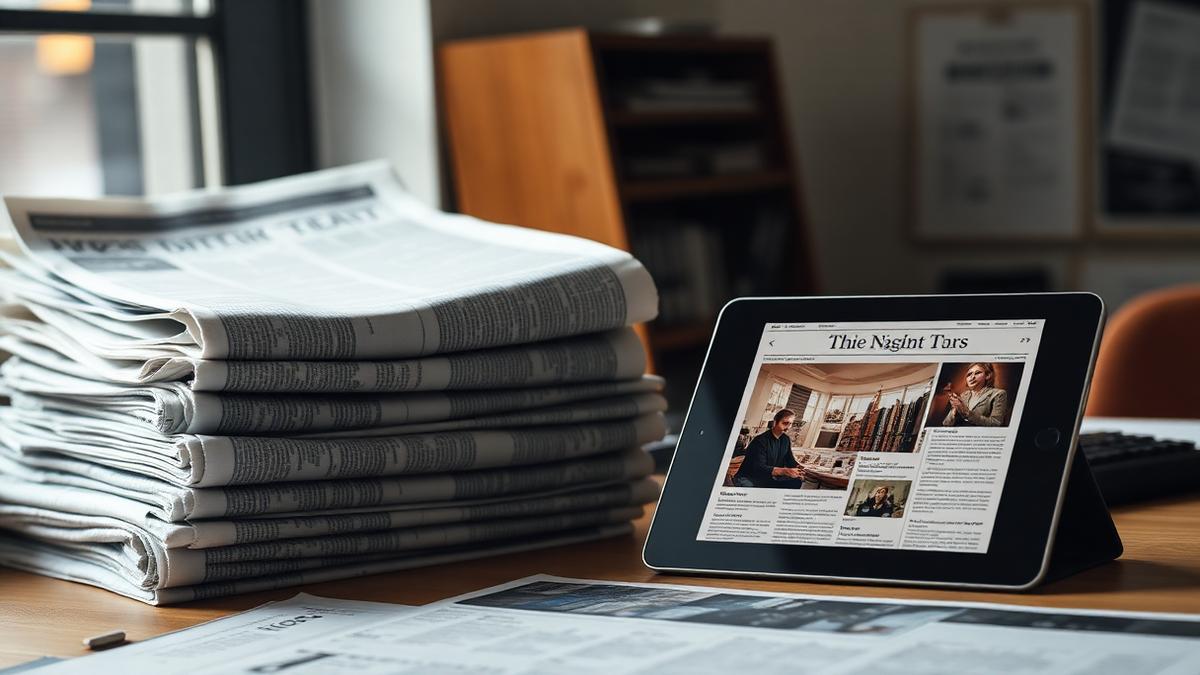
For most of the twentieth century, publishing followed a predictable rhythm. A manuscript was written, edited, typeset, printed, and distributed on a schedule measured in months. Readers encountered finished work, and the gap between an idea and its public life was wide enough to allow for careful revision. Digital media collapsed that gap, and the effects have rippled through nearly every corner of how writing is produced and consumed.
From fixed editions to living documents
A printed book or magazine issue is a fixed object. Once it leaves the press, errors and all, it exists in that form until a new edition arrives. Online publishing broke this permanence. Articles can be updated, corrected, or expanded after they go live, and headlines can be changed to test what draws attention. This flexibility has real benefits: factual errors get fixed quickly, and breaking stories can be built out in real time as new information arrives.
But the same flexibility introduces problems that print never had to solve. Readers can no longer assume that what they see today matches what someone else saw yesterday. Quietly revised articles, deleted paragraphs, and silently swapped images have made the very idea of a stable published record harder to trust.
New economics, new incentives
Print publishing was subsidized by scarcity. Only so many pages could be printed, so advertisers competed for limited space, and subscriptions provided a steady, predictable base of revenue. Online publishing removed the scarcity of space but introduced a much fiercer scarcity of attention. When every publication, blog, and platform competes in the same feed, the metrics that matter shift from circulation numbers to clicks, time on page, and shares.
This change in what gets measured inevitably changes what gets made. Headlines grow more urgent. Stories get shorter or, in some cases, artificially padded to satisfy algorithms that reward longer dwell time. None of this is inherently dishonest, but it does mean that the invisible hand shaping a piece of writing today is different from the one that shaped it fifty years ago.
What stayed the same
- The core work of reporting, structuring an argument, and finding the right sentence has not been automated away.
- Editors still matter enormously, even if their job now includes headline testing and audience data alongside line edits.
- Readers still seek out writers whose judgment and voice they trust, regardless of the platform carrying the work.
The rise of direct publishing
Perhaps the most significant structural change has been the collapse of the barrier between writer and reader. A writer no longer needs a publishing house, a printing press, or a distribution network to reach an audience. Newsletters, independent sites, and self-published books let anyone put finished work in front of readers immediately.
This has been liberating for writers working outside mainstream tastes, and it has created new careers that would have been impossible under the old model. It has also fragmented the readership that used to gather around a small number of shared publications, making it harder for any single outlet to claim a broad, common audience the way general-interest magazines once did.
Editing in an accelerated world
The compressed timelines of digital publishing put new pressure on editorial process. Where a print magazine might spend weeks fact-checking and revising a feature, an online outlet may publish and iterate within hours. This is not necessarily worse, but it requires different disciplines: clear correction policies, transparent versioning, and editors willing to slow a piece down even when the technology allows it to go out instantly.
Some of the most durable digital publications have thrived precisely because they resisted the pressure to publish everything immediately, choosing instead to apply print-era patience to a digital-era platform. That combination, deliberate editing paired with instant distribution, has proven to be one of the more resilient models to emerge from the last two decades.
What readers gained and lost
Readers gained access to a staggering range of voices and perspectives that never would have found a printed outlet. They gained immediacy, searchability, and the ability to follow a story as it unfolds rather than waiting for the next issue. What they lost is harder to name but easy to feel: a sense of a shared, finite set of publications that a community could gather around, and a slower reading experience less interrupted by notifications and links pulling attention elsewhere.
Understanding this trade-off is useful for anyone trying to make sense of how much writing and reading has changed, and for readers who want to be more intentional about the sources they return to. For more on how these shifts continue to play out, see our culture coverage.
Looking ahead
The next phase of this transformation is already underway, as automated tools take on more of the editing and even drafting process. Whatever comes next will likely follow the same pattern as the shift to digital: real gains in speed and access, paired with new problems that publishers and readers will need to work out together. The lesson of the last thirty years is that the format of publishing changes far faster than the underlying need it serves, which is simply to help people find writing worth their time.
About the author
Helena Vos writes about media, culture and how small businesses actually operate. She previously worked in independent publishing, which is where she learned to distrust round numbers and unsourced statistics.