Why weather forecasts are expressed as probabilities
A forecast of "70% chance of rain" is not a hedge; it is the most honest answer available.
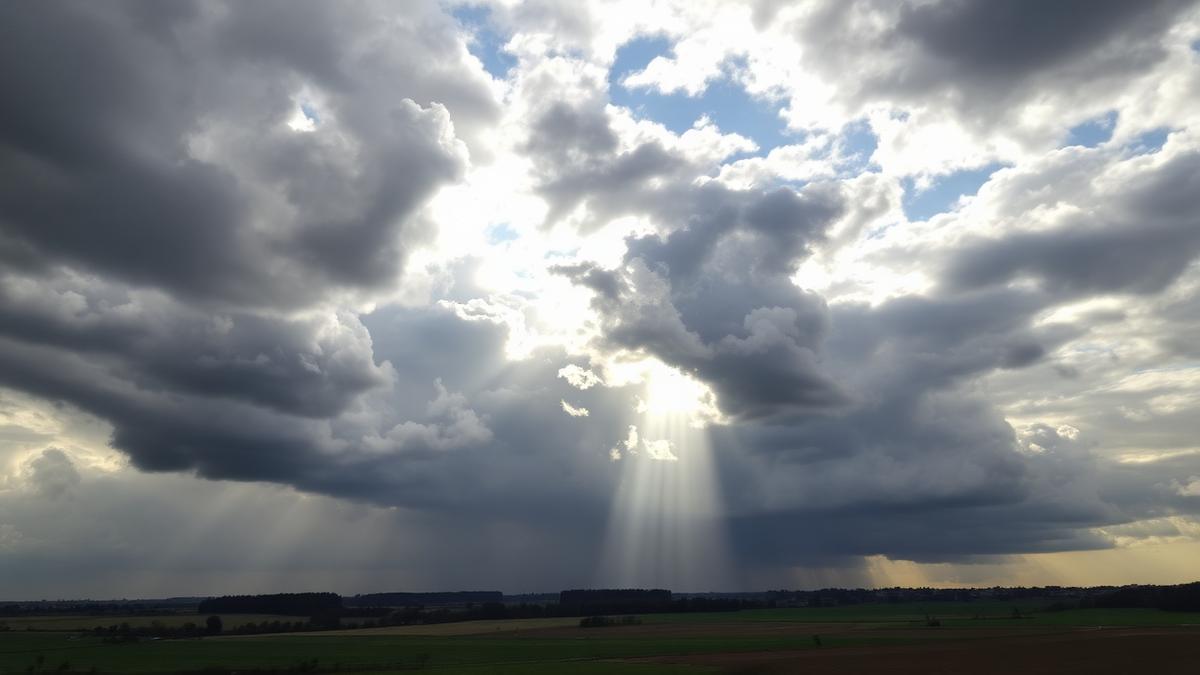
A forecast that says there is a 70% chance of rain tomorrow often gets treated as a shrug, a way of avoiding commitment. In fact, that percentage is the product of a great deal of calculation, and it reflects something true and unavoidable about how the atmosphere behaves, rather than a lack of confidence on the part of forecasters.
The atmosphere is sensitive to small differences
Weather systems are governed by physical laws that are well understood, but the atmosphere is what is often described as a chaotic system: extremely small differences in starting conditions can lead to noticeably different outcomes a few days later. This does not mean the weather is random or unpredictable in principle; it means that predicting it precisely would require knowing the state of the atmosphere with a level of detail that is simply not achievable in practice, given the size and complexity of the system involved.
Because of this sensitivity, even tiny gaps or inaccuracies in the data feeding a forecast can grow into meaningfully different predicted outcomes over time. The further out a forecast looks, the more room there is for these small differences to diverge.
Running the model many times, not once
Modern forecasting deals with this by running a weather model not just once, but many times, each time with very slightly different starting conditions that reflect the genuine uncertainty in the initial measurements. This approach, known as ensemble forecasting, produces a range of possible outcomes rather than a single prediction.
If a large majority of these model runs show rain in a given area at a given time, the forecast will state a high chance of rain. If the runs are split roughly evenly, the forecast will reflect that split with a percentage closer to fifty. The percentage in a forecast is essentially a summary of how much the different plausible versions of the future agree with each other.
What the percentage actually describes
A common misunderstanding is that a 70% chance of rain means it will rain across 70% of the area, or for 70% of the day. More precisely, it typically describes the estimated likelihood that measurable rain will occur at a specific location during the forecast period, based on how the atmosphere has behaved in comparable past situations and how the current model runs are distributed.
- Higher percentages reflect greater agreement among model runs, not greater rainfall intensity.
- A low percentage does not guarantee dry weather, only that it is judged less likely.
- Forecast accuracy is generally highest for the next day or two and decreases the further ahead the forecast looks.
A rough guide to reading forecasts
| Forecast horizon | Typical reliability | What to expect |
|---|---|---|
| Next 24 hours | High | Details usually close to what actually occurs |
| 2 to 5 days out | Moderate | General trend usually right, timing and intensity less certain |
| Beyond a week | Lower | Best treated as a broad outlook rather than a specific prediction |
Why this is a strength, not a weakness
Presenting weather as a probability, rather than a false certainty, is arguably more honest and more useful than a confident single prediction would be. A forecast that says "it will rain" and turns out wrong offers no useful information about how wrong it was likely to be. A forecast that says there is a 70% chance offers a genuinely calibrated sense of risk that a person can weigh against their own plans — worth carrying an umbrella, perhaps not worth cancelling an outdoor event outright.
Living with uncertainty sensibly
Understanding forecasts as probabilities rather than promises changes how they are best used. A high percentage justifies real precaution; a moderate one suggests keeping options open rather than assuming either outcome; a low one suggests dry weather is likely without ruling out a surprise. None of this reflects a failure of meteorology — it reflects an honest reckoning with a genuinely complex physical system. For more explanations of how scientific prediction works, see our science coverage.
About the author
Idris Oyelaran covers consumer technology, privacy and applied science. He is happiest explaining a complicated system in ordinary language, and he tests every recommendation on his own devices before it appears in a story.