How Sourdough Fermentation Works
A sourdough starter is essentially a small, self-sustaining ecosystem of wild yeast and bacteria, and understanding it explains why the bread tastes the way it does.
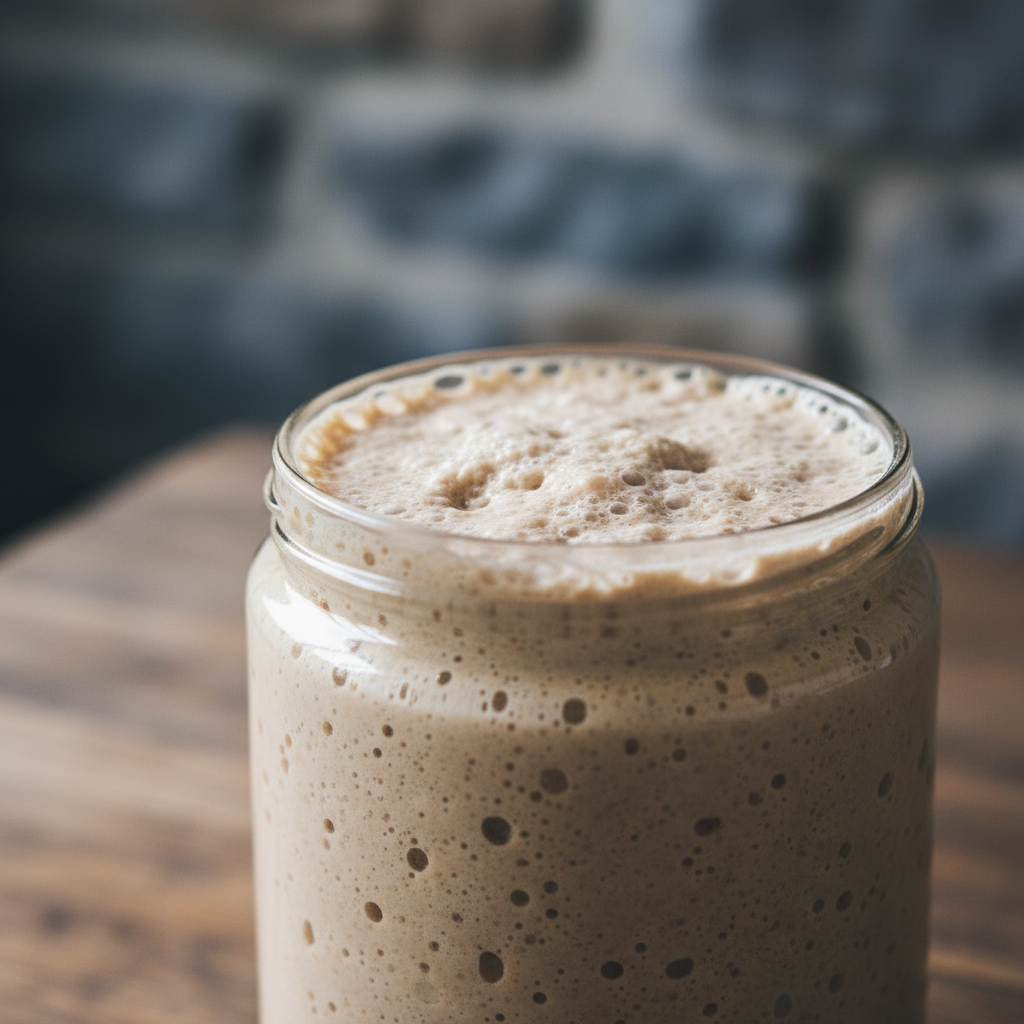
A jar of flour and water left on a kitchen counter should, by most intuitions, simply go stale or mouldy. Instead, within a few days, it begins to bubble, rise, fall, and smell faintly of yogurt and ripe fruit. This is a sourdough starter coming to life, and what is actually happening inside that jar is a small, self-organising ecosystem, a genuine community of microorganisms working together in a way that has fed humans for thousands of years.
Where the microbes come from
A sourdough starter begins with nothing more than flour and water, but flour is never truly sterile. It carries wild yeast spores and various bacteria naturally present on the grain, in the surrounding air, and on the equipment used to mix it. When flour is combined with water and left at room temperature, these dormant organisms wake up and begin to feed on the starches and sugars present in the flour.
Over repeated daily feedings, a rough natural selection takes place. Organisms poorly suited to the acidic, sugar-limited environment die off, while two groups thrive and come to dominate: wild yeast and lactic acid bacteria. The resulting stable community is what bakers call a mature starter.
The yeast half of the partnership
Wild yeast in a sourdough starter, most commonly species in the genus Saccharomyces though often several species coexist, feeds on simple sugars released when enzymes in the flour break down starch. As yeast consumes these sugars, it produces carbon dioxide gas and ethanol as byproducts, a process called fermentation.
The carbon dioxide is what makes bread rise: it gets trapped within the stretchy network of gluten proteins in the dough, forming tiny pockets that expand as more gas is produced, creating the open, airy crumb associated with well-made sourdough.
The bacteria half of the partnership
Alongside the yeast live lactic acid bacteria, most notably species in the genus Lactobacillus, which also ferment sugars but produce different byproducts: primarily lactic acid, and depending on the specific strains present, acetic acid as well. These acids are responsible for sourdough's signature tang. Lactic acid tends to produce a milder, yogurt-like sourness, while acetic acid, the same acid found in vinegar, produces a sharper, more pungent sourness.
Why yeast and bacteria do not compete each other out
It might seem like two organisms feeding on the same limited food source in the same jar would inevitably compete until one wins, but sourdough cultures instead settle into a stable, mutually beneficial relationship. Lactic acid bacteria generally tolerate the acidic environment they help create far better than most other competing microbes, which effectively protects the culture from contamination by unwanted organisms. Wild sourdough yeast, meanwhile, has evolved to be notably more tolerant of this acidity than commercial baker''s yeast, allowing it to keep functioning in a environment too hostile for many other yeasts.
The two groups also draw on the food supply somewhat differently and produce byproducts that do not simply poison each other outright at normal concentrations, allowing a long-term balance rather than a hostile takeover by either side.
What tips the balance
- Warmer temperatures tend to favour yeast activity, producing faster rise but often milder tang.
- Cooler temperatures tend to favour lactic acid bacteria, slowing rise but deepening sourness.
- A wetter dough, higher in hydration, tends to encourage more acetic acid production, adding sharper tang.
- A drier, stiffer dough or starter tends to favour lactic acid production, giving a milder, rounder sourness.
- Feeding frequency shifts the ratio of food available to each population, changing both rise speed and flavour over time.
Why sourdough rises more slowly than commercial yeast bread
Bread made with commercial baker's yeast, a single cultivated strain selected specifically for fast, vigorous carbon dioxide production, tends to rise within one or two hours. Sourdough, relying on wild yeast strains that are generally less vigorous, combined with the competing metabolic activity of lactic acid bacteria, typically takes many hours, sometimes the better part of a day, to rise fully. This slower fermentation is not simply an inconvenience; it is directly responsible for much of sourdough's flavour complexity, since a longer fermentation gives more time for acids and flavour compounds to build up.
The nutritional side effects of slow fermentation
The extended fermentation time in sourdough also has measurable effects beyond flavour. The acids produced during fermentation help break down phytic acid, a compound naturally present in whole grains that can otherwise bind minerals like iron and zinc and reduce how easily the body absorbs them. Sourdough fermentation also partially breaks down some of the starches and proteins in the flour before baking even begins, which is one reason many people report that sourdough sits more comfortably than bread made with commercial yeast, although individual digestive responses vary considerably and sourdough is not a guaranteed solution for anyone with a diagnosed gluten-related condition.
A quick comparison
| Feature | Commercial yeast bread | Sourdough bread |
|---|---|---|
| Rising organism | Single cultivated yeast strain | Wild yeast plus lactic acid bacteria |
| Typical rise time | 1 to 2 hours | 4 to 24 hours |
| Flavour profile | Neutral, mildly sweet | Tangy, complex |
| Phytic acid breakdown | Minimal | Considerable |
Why every starter tastes slightly different
No two sourdough starters are truly identical, even when begun with the same flour, because the specific mix of wild yeast and bacterial strains that end up dominating a culture depends on the particular microbes present in a given kitchen, on the flour's origin, and on the exact feeding routine used. This is why bakers in different regions, or even different households, often describe their starters as having a distinct personality, and why a starter carried from one place to another and maintained differently will gradually shift in character over time as its microbial balance adapts to a new environment.
A living culture, quite literally
Sourdough is one of the more accessible ways to observe microbial ecology directly in a kitchen, a stable partnership between two very different types of organism producing something genuinely useful for the effort. Feeding a starter is, in a very real sense, tending a small ecosystem rather than simply preserving an ingredient. For more pieces on the everyday science behind familiar processes, visit our science section.
About the author
Helena Vos writes about media, culture and how small businesses actually operate. She previously worked in independent publishing, which is where she learned to distrust round numbers and unsourced statistics.