Why film sound design goes unnoticed
The best sound design is invisible by intention, quietly doing more emotional work than most viewers ever realize.
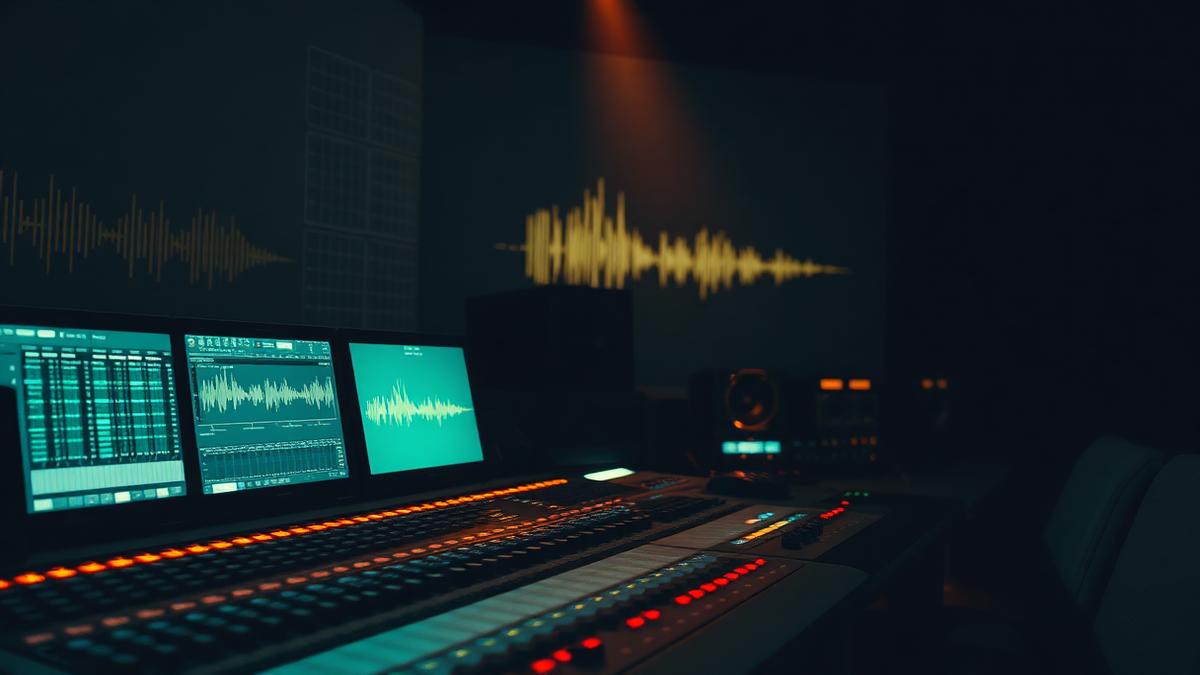
Ask most moviegoers what they remember about a film, and they will usually describe images: a striking shot, a performance, a costume. Rarely do they mention sound, even though sound design is often doing as much emotional work as anything on screen. This invisibility is not an accident. It is, in a real sense, the goal.
Designed to disappear
Unlike a musical score, which is meant to be noticed and felt as music, sound design usually aims to feel like a natural part of the world on screen. Footsteps, the creak of a door, the specific texture of wind, none of these should draw attention to themselves as constructed elements. The moment an audience consciously notices a sound effect, it has often failed at its primary job, which is to support the scene without pulling focus from it.
This creates an unusual professional paradox: sound designers spend enormous care and skill crafting effects specifically so that audiences will not register the craft at all. Success, in this field, often looks exactly like invisibility.
How silence and sound shape tension
One of the most powerful tools in a sound designer's kit is not sound at all, but the deliberate absence of it. A sudden drop into near-silence before a loud, jarring effect can produce a stronger physical reaction than a constant wall of noise ever could. Filmmakers use this contrast to control tension, letting quiet stretches build anticipation that a single well-placed sound can then release.
Similarly, the layering of ambient sound, distant traffic, wind, the low hum of a room, gives scenes a sense of physical space that dialogue and music alone cannot provide. Removing that ambient layer, even briefly, can make a space feel suddenly unnatural or threatening, a technique often used to signal that something in a scene is wrong before the visuals confirm it.
Elements that make up film sound
- Dialogue, recorded and mixed to remain intelligible against everything else happening in a scene.
- Foley, the reconstructed everyday sounds like footsteps and clothing movement, recorded separately and synced to picture.
- Ambient sound and room tone, which establish the acoustic character of a space.
- Sound effects built specifically for the film, from mundane props to entirely invented sounds for fantastical elements.
Constructing sounds that do not exist
Some of the most memorable sounds in film history were never recorded from their apparent source at all. Creature sounds, futuristic technology, and impossible events require sound designers to invent something that feels real despite having no natural equivalent to record. This often involves combining and manipulating recordings of entirely unrelated sources until the result feels both convincing and distinct.
This inventive process is one reason sound design is sometimes described as closer to composition than to recording: the designer is not simply capturing reality but building an impression of it from unrelated raw material.
The relationship between sound and music
Sound design and musical score occupy the same acoustic space, and coordinating the two requires careful collaboration. A scene overloaded with both a dense sound design and a full musical score can become muddled, each element competing for the listener's attention. Skilled filmmaking often involves deciding, moment by moment, whether a scene needs music, sound design, or a deliberate combination of both, and knowing when to let one recede so the other can carry the emotional weight.
This balance is rarely something audiences consciously notice, but its absence is felt immediately: a scene that feels emotionally flat or oddly chaotic often has a mismatch between its sound design and score, rather than a problem with the visuals or performances at all.
Why it deserves more attention
Because sound design succeeds by staying unnoticed, it rarely receives the recognition given to cinematography or performance, even though its absence would be immediately and painfully obvious. Paying closer attention to sound on a second or third viewing of a favorite film often reveals just how much emotional labor has been happening quietly in the background all along. Readers curious about the technical craft behind familiar films can find more in our entertainment coverage.
The next time a scene produces a physical reaction, a chill, a held breath, a sudden startle, it is worth asking how much of that reaction came not from what was shown, but from what was carefully, invisibly heard.
About the author
Mara Devlin edits the publication and writes about the internet's infrastructure and incentives. She spent a decade as a technology reporter and editor before founding this masthead, and still does most of her reporting by reading documentation nobody else wants to read.