The Logistics of Routing a World Tour
Behind every stadium tour sits a route-planning puzzle involving geography, venue availability, freight costs and human endurance.
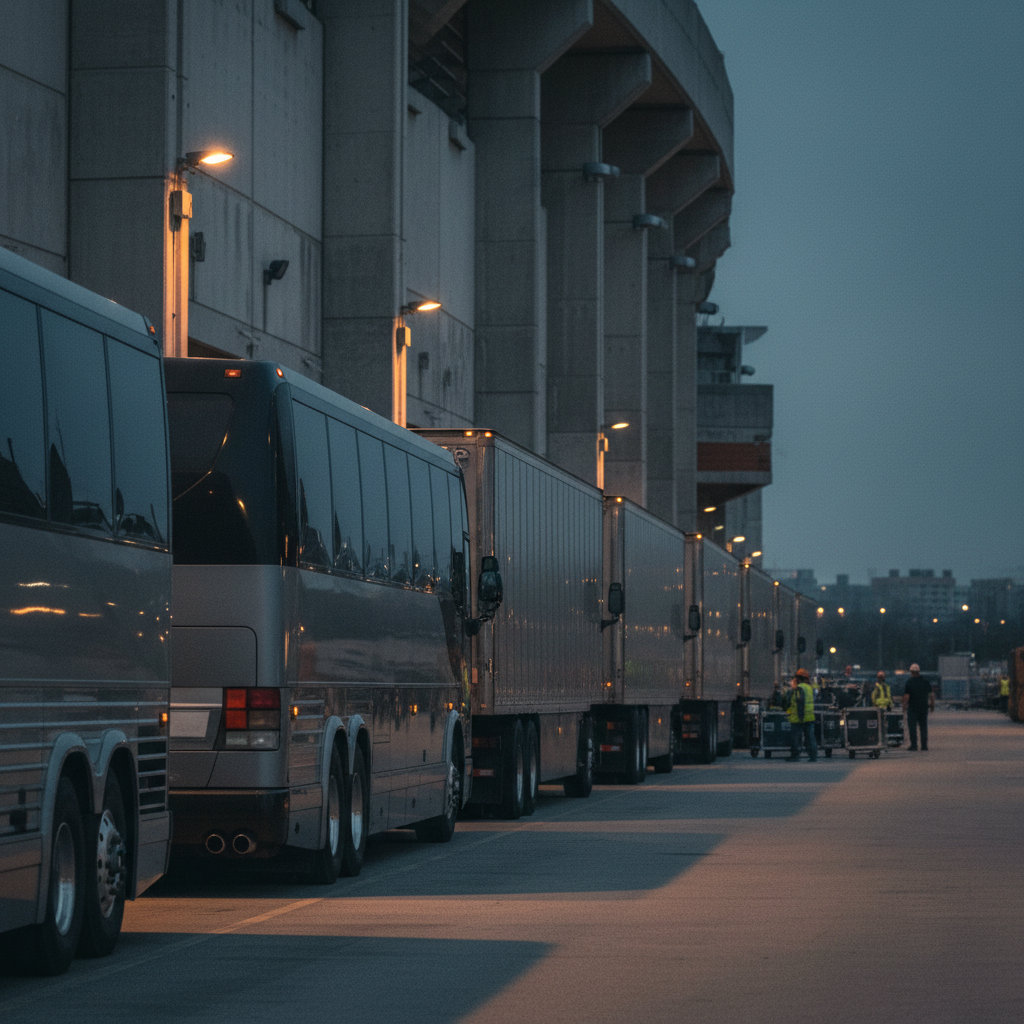
Fans scanning a newly announced tour often wonder why an artist plays a city on one coast, then skips several nearby major markets before returning weeks later. The answer rarely has anything to do with the artist's preferences and everything to do with a specialist discipline called routing, handled by tour managers and booking agents who treat a world tour less like a creative statement and more like an enormous logistics problem with a fixed, unforgiving budget.
What Routing Actually Means
Routing is the process of sequencing tour dates in the order that minimises wasted travel time and cost while respecting venue availability, local promoter relationships and the physical limits of the touring party. A poorly routed tour can bleed money through unnecessary flights, redundant freight moves and exhausted crews, even if every individual show sells out.
The starting point for any tour is almost never a wish list of cities. It is a spreadsheet of available venue dates, since major arenas and stadiums are booked years in advance and an artist's schedule has to slot into whatever windows those buildings actually have open. This is the single biggest reason tour routes look geographically odd: the artist did not skip a city by choice, the arena simply had no available date in that window.
The Booking Agent's Central Role
A booking agent works with local promoters in each market to secure venues, negotiate financial terms and gauge ticket demand before a date is confirmed. Agents often route international legs of a tour a full year or more ahead of the first show, working backwards from major festival commitments or fixed dates like a stadium already contracted, then filling in the gaps around them.
Routing Around Geography
Efficient routing tries to move in a single geographic direction as much as possible, working through a region before moving to the next, rather than zig-zagging back and forth, which would multiply freight and travel costs. For continental European or North American legs, this often produces a route that looks like a rough loop or a straight line across a map, even though ticket demand data might suggest a different order would sell better in isolation.
Freight, Trucks and the Physical Show
For large productions, the physical show, stage, lighting rig, video screens, sound system, is moved by a convoy of trucks that must arrive, be unloaded, assembled, used and disassembled again within a strict window between shows. Many stadium tours run what is called a "day off" between certain cities purely to give the freight convoy enough driving time, not because the artist needs the rest.
Double Rigs and Leapfrogging
For the largest tours, production teams often build two complete sets of staging, sometimes called a "leapfrog rig", so that one full setup can be constructed at the next venue while the show currently in use is still running at the previous city. This dramatically reduces the turnaround time between shows but roughly doubles equipment costs, a trade-off only viable for tours with the ticket sales to support it.
Crew Welfare Shapes the Calendar
Touring crews, from lighting technicians to riggers to drivers, work under strict rest requirements in many territories, limiting how many consecutive hours they can drive or work before a mandated break. Tour routing has to build in enough recovery time to keep the show legal and safe, which is why even hugely profitable tours cannot simply be scheduled every single night without a break.
- Long haul flights between continents are usually scheduled around a cluster of shows rather than single dates, to minimise the number of times the entire touring party crosses time zones.
- Local promoters often cover certain costs, such as venue staffing or local marketing, in exchange for a share of ticket revenue, which factors into which cities are prioritised.
- Weather and seasonal patterns, particularly for outdoor stadium shows, restrict certain regions to specific windows of the year.
Currency, Tax and Visas
International routing also has to account for visa processing times for the entire touring party, work permits that vary significantly by country, and currency exposure on contracts signed in local currency months before a show actually happens. A tour crossing many borders in a short period requires a dedicated logistics coordinator whose job is almost entirely paperwork, arranging customs documentation for equipment and instruments that must clear borders on a strict schedule.
A Simplified View of the Puzzle
| Constraint | Why it matters |
|---|---|
| Venue availability | Major venues are booked years ahead, fixing possible dates |
| Freight travel time | Trucks need enough hours to move, unload and rebuild the show |
| Crew rest rules | Legal limits on consecutive working hours affect scheduling |
| Visas and customs | International crossings require lead time for paperwork |
| Market demand | Determines venue size and number of shows per city |
Why Some Cities Get Multiple Nights
Adding a second or third night in the same city is usually more efficient than moving to a new market for a single show, since it avoids an additional freight move entirely while capturing demand from a larger metropolitan area. This is why major artists increasingly play multiple consecutive nights in a handful of large cities rather than single dates across many smaller ones, a shift that has also been driven by rising freight and staffing costs across the touring industry.
When Routing Breaks Down
Illness, injury, extreme weather or a venue's structural issue can force a date to be postponed, which then creates a knock-on problem for every subsequent show, since freight, crew rest and the next venue's availability are all interlinked. Rescheduling a single date on a tightly routed tour can require rebuilding weeks of subsequent logistics, which is why postponed shows are often pushed to the very end of a tour or into a separate additional leg entirely, rather than simply inserted back into the existing schedule.
The Business Logic Behind the Map
Ultimately, a tour route is a financial model as much as a travel plan, built to maximise the number of high-capacity shows while minimising the number of expensive, unproductive travel days in between. Understanding this turns what looks like an arbitrary or frustrating list of dates into a genuinely intricate piece of planning, one that has to satisfy an artist's creative ambitions, a promoter's commercial targets and a crew's basic physical limits, all at once.
Further coverage of how live music actually operates behind the scenes is available across entertainment.
About the author
Idris Oyelaran covers consumer technology, privacy and applied science. He is happiest explaining a complicated system in ordinary language, and he tests every recommendation on his own devices before it appears in a story.